Showing posts with label WR - The Woman Who Drew Buildings. Show all posts

Thursday, 10 September 2009

Four Books on My Mind in Newcastle.

001Dolly Theft Best Talking about your work to numbers of strangers is not for the weak- kneed. On Tuesday night I was booked to talk to a group of readers at the new Palace of Books, Newcastle City’s six storey’d glass fronted multi-million pound library. G. who dropped me off for the train (and eats girders for breakfast), told me he thought I was very brave.

To be honest, no matter how many times I do this, it’s never easy. It’s like cabaret. You put on your make-up. You wish you looked like Gwyneth Paltrow. You choose your outfit. (Black ,with that favourite pleated tourquoise scarf that falls around all the time.) You wait in vain for someone to wish you to ‘break a leg’ as you go on.

I am especially early, to see this wonderful new facility and also to gather my wits before ‘going on’. In the neat little cafe where I have home-made lemonade and coffee, I bump into Carole McGuigan, a talented playwright and actress, and we talk about Julia(Darling), whom we both miss. Carole is now revising her first novel so we have lots to talk about.

Sheila Naughton, services manager at The City Library who comes to find me, reminds me that Newcastle is a hotbed of writing talent, nurtured by New Writing North, under the indefatigable Claire Malcolm and figure-headed by internationally esteemed Mslexia Magazine, edited by a quiet Americam, Daneet Steffans. Lots of wild writers up there.

In the room is a very nice crowd of people. Beside me is a table full of my books – mainly Sandie Shaw and the Millionth Marvell Sandie Shaw RHBCooker (about which I am to talk as it’s is out now in paperback); a sprinkling of The Woman Who Drew Buildings (new in hardback) and a few of my back list including Family Ties and The Lavender House. Borders have done me proud.

I look at the bright, interested faces and read passages from Sandie Shaw and the Millionth Marvell Cooker – an easy novel to talk about, as (although it is fiction), it has an unusually close connection to my personal and family history. I go on then to share with them fascinating inspiration for my new - very different - The Woman Who Drew Buildings which is launched in hardback this week.

the woman who drew buildings[1]

The first smile of appreciation and the first spurt of laughter are like bulbs going on in my head. Now I no longer need to feel brave.

The questions they ask are penetrating: life experiences are shared. Then among the very good questions one lady asks a very familiar one, ‘When did you first start Writing?’

This is my opportunity to produce from my bag a small book protected by cling film. This is my very first published book – a children’s novel, written in 1972, called Theft. 005 Best It was published by Corgi Transworld and the editor who bought it was a great woman called Anne Wood, the first Children’s Editor for the Transworld’s Carousel imprint. Anne went on to invent the Teletubbies and become a great force on children’s media.

I went on to write a lot more novels.

I thought I owned the only copy in the world, of this little, thirty odd year old paperback. But this very morning a new copy came through the post, courtesy of Amazon world wide second-hand market. (Odd when your own books become collectibles) Amazing! The people here in Newcastle share my pleasure at this surprise.

I know they have enjoyed it. There is a real buzz in the room at the end. One woman comes up to talk about fate, and how things are pre-ordained. Others come up to say thank you, how much they enjoyed it. One woman says it was great. Best yet! (In a programme of talks.) Her friend nods vigorously. Great endorsement.

I have talked here before about how I love and treasure libraries and now I love Newcastle City Library. Thank you Sheila and your colleagues. Your library has style. That’s confirmed for me when the driver actually opens his taxi door for me as Sheila waves me off.

After the train, another taxi! (No G or B for a lift – both on rugby duty…) Sitting here in the taxi it dawns on me that I’ve had four novels on my mind today: 1) Sandie Shaw and the Millio013nth Marvel Cooker, 2) The Woman Who Drew Buildings, 3) Theft, and my exciting new one (4) which is now in process and always on my mind, The Miracle of The Maison d’Estella.

As we draw away from Durham I realise this taxi driver is talking a lot - about adjusting to his father’s new girlfriend, and all the problems in his life. How he lives alone. How his father at 74 is going off with his girlfriend to another part of the country to live. He rambles on about the family house which, to his regret, is being sold.

I ask how he gets on with his father’s new girlfriend. ‘That’s immaterial!’ he barks. I am silenced. He asks if I have family at home. ‘Yes,’ I say, stretching the truth a bit, ‘a very large husband and a very large son.’

I make sure he drops me at the end of my road, not outside my house. As I walk along I can see (with my peripheral vision) that the taxi hasn’t moved on. Luckily there is a large van and two cars in the road, which will obscure just which house I enter. When I get inside my darkened empty house I double lock the doors, front and back. (Now there’s a fifth story when you think of it…)

And maybe G’s right. It is brave to be doing what I’m doing.

wx

Hope you’re enjoying the novels.

Monday, 22 June 2009

Borrowing Characters from History

It’s heating up down here. The municipal flower beds are blossoming in an entirely different configuration to those at home. Penstemon, lavender, gaura, marigolds, - all subtly planted in an apparently random fashion that mimics the natural wildness of the riverbanks that we saw here earlier this season. A far cry from much brighter, jolly bedding plants packing out the centre of roundabouts at home.

Outside the city in the numerous vineyards the plants in their lines are a hot bright green and the grapes are plumping up under the sheltering leaves. The corn is as high as an elephants knee – it’ll be a while before it reaches his eye… And we’ve actually witnessed the harvesting of a golden field of wheat months before such events back at home.

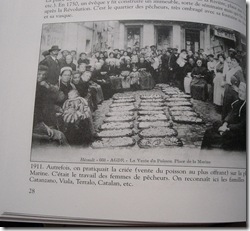
In the heat, one cool place - in more ways than one - to sit and talk or write is la Place 195de la Marine at the far end of the quayside, past the rather grand cafes bobbing about on their river pontoons. In years gone by this square was where the fishermen would land their catches and they (or their wives) would sell their wares.

But now la Place de la Marine is a dappled open space, lined with plane trees which shade blue tables belonging to a small, elegant cafe called Cafe Capitaine where charming people bring you coffee, wine, or fine food to fuel your thinking, talking and writing

Interestingly, inside the cafe is a very colourful, illuminated picture of a large boat. Before it is a small sailing boat where stand our own sailor adventurers, Nira and Allan and their black dog. (see Nira and Allan)

Even on the hottest day at this end of the quayside, you can rely on cooling offshore breezes, as well as catching the last rays of the sun at the end of the day. I’ve drafted chapters of the new novel here. I’ve watched children play independently in family groups, the big sisters and brothers taking care of the little ones. I’ve watched droves of visitors arriving on their bikes, or off the small ferry that works its way up and down the Herault and stops at this small landing.

The children play around the statue at the centre of the square - a creamy evocation of Aphrodite, spouse of Poseidon, the God of the Sea. She’s wielding a paddle and stands atop a globe of the world. This statue is dedicated to navigators who have set out from this place and sailed the world’s oceans.

My own current favourite navigator is a sailor called Jean-Victor CannAsrtolobeac, who made a voyage round the world in 1826 in a ship called l’Astrolobe. The Astrolobe story has royal connections: hoping to find the last traces of an expedition led by a Captain Lapèrouse, which had disappeared in 1788 in the Pacific, King Charles X entrusted the search to a Frigate, Captain Jules Dinant d’Urville. This Captain loaded up at Toulon on 7th February 1826 on the corvette L’Astrolobe with a crew of 80 men, one of whom was Jean-Victor Cannac.

Now then! This young man’s family owned the Maison d’Estella – the house at the centre of my new story! And the Cannac family lived in the house right to 1916.

We have direct information about nineteen year old Jean-Victor from his sailor’s ticket. He stands 1m60 tall, has black hair which covers his brow; the same colour eyes. He has an oval face, a large nose, a small mouth and a dimpled chin. These fine attributes, his qualities as a sailor, and his willing attitude on board, were much appreciated by the Captain who eventually named an unnamed Pacific island after him.

How can any writer resist all this? It is either another novel in itself … oh dear I might have to come back!… or perhaps I might just borrow Jean-Victor as a prime example of brave Agathoise manhood and plant him in the middle of my story - either in the present day or in 300AD .

As everything here, this is all very tempting for a poor writer….

Wx

**********

Work in progress from At The Maison d’Estella

AD 396

As he and his hefty mate rowed their way between lush banks of the river, away from the city, the curly haired sailor talked rapidly to his passengers about how to make the frail craft work for them. ‘You put your weight so, messire,’ he said to Modeste, ‘then pull back hard. Then pause. Let the water do some of the work. The flow of the river towards the sea will pull you back a little, but you will make progress if you row, steadily, steadily.’

Then he nodded at Tib. ‘And you, young man, you know how I taught you to use the sail when you were small? Test the wind, then raise the sail. But we won’t raise it yet, The wind will be better for you up stream.’ He paused in his efforts and the boat drifted back downstream. ‘See? In this sweep of the river the offshore breezes could drive you back out to sea, And there you will both be lost, lost to us all.’

*********

Tuesday, 19 May 2009

HOORAY New Cover!


It’s always a glorious day when, having worked on a novel for one, two or three years, finally to see it as others will see it on the shelves in a book shop.

And here is my novel -

The Wwoman who drew 2oman Who Drew Buildings

in all her finery.

A cover is crucial to a book – a good cover can express the feeling of a novel, the mood, the context, the atmosphere. It can get my story into the hands of people who will  really enjoy it.

At its best, as well, it will appeal to those important booksellers and librarians who ensure it will be out there,  available for those who hear about the book through articles and reviews – and perhaps through this account on my blog!


This novel was inspired by tales told to me by the wonderful  and somewhat  mystical writer and artist, Mary Davies who now lives in retirement on the Isle of Arran and who has also, in her time, drawn buildings.

It takes place in Poland in 1981 and Britain in 2006 . What’s it about? It’s about  the consuming nature of art, the shadowy place between now and the hereafter; it’s about passionate encounters arising from a confluence of cultures and the long journey of a mother and son to mutual understanding.

And also I’ve been told it’s a damned good story…

This brilliant cover is a result of the careful response to me and my novel by my lovely editor, Harriet Evans   - in combination with  the design department at Headline. Sadly I am losing Harrie , an accomplished  novelist herself, who is going off to concentrate on novels entirely: my loss and the reading public’s great gain.

I am also delighted because incorporated in this design are drawings by my friend Fiona Naughton  www.fionanaughtonarts.com  - who also is a woman who draws buildings! This is quite something for me, as I have watched Fiona develop from a child who could draw into a fine artist in her own right.

So I hope you like the cover and – when you get your hands on the book in September – I hope you love reading the novel as much as I love writing it.

Let me know. I’d love to hear from you.

Wendy R

Sunday, 12 April 2009


THINKING ABOUT KNIVES...

The social crimes of family dysfunction, petty long term cruelty, and occasional suicidal or psychopathic outbursts have frequently been part of my long fiction. However two long terms as writer-in-residence in a women’s prison have shown me that the sharper focus of the short story might perhaps be very well suited to explore the darker themes inevitable in such a setting.

In prison I worked with individuals who had walked the razor edge of survival all their lives, whose given role as victim had been transformed by circumstance to that of perpetrator. At first, these perceptions crept into my long fiction, from Long Journey Home - about women in a Japanese internment camp - to my most recent novel The Woman Who Drew Buildings (out in September) where one of the two main characters is just out of prison.

However, more and more those sharp insights into individuals on the edge began to crystallise into elements of a short story. This distilled form reflects the epiphanic glimpses and the flashes of insight I experienced many year in recent years through this inspiring contact with the people as I encouraged them to write and to read to make more sense of their world.

The outcome of all this is KNIVES, a series of short stories - ranging from the inspired ravings of an old woman, once respectable and now on the streets, to a young man who goes to view a house and has a near miss with a psychopathic killer, to a young woman - more sinned against than sinning - hell bent on self destruction. There are other, less pathological stories in the collection - of a woman breaking free from a long and confining marriage, of a boy learning his craft deep in the bowels of the earth.
But I think that - more than violence, more than darkness, all these stories reflect the knowingness and the sense of irony - even comedy - that is the human saving grace of people under stress and in either physical or psychological confinement.

Knives (Iron Press) is launched this month (April 2009).
Happy reading, happy writing

Wendyx

Monday, 6 April 2009

Artistic Licence


From time to time on this blog you will see art work by my young friend Fiona. She has always taken an interest my writing; I have always taken an interest in her art. One highlight of our joint creativity was the publication of my novel Honesty's Daughter, inspired by the manor house of the Shafto family, Whitworth Hall. Fiona painted a beautiful collection of images in and around the hall and exhibited them on our summer's day launch of the novel. As all launches should be, this was a celebration of the first order.

I am hoping some of Fiona's drawings will be part of the cover design for the new novel The Woman Who Drew Buildings, a novel partly set in Poland. You can see one of her drawings of Kracow on this blog, alongside my very first post. Making People Is Mad. (Click on this title left, on my archive list)


On this page here you can see her imagined view of Whitworth Hall before it burned down in the eighteenth century, alongside her painting of the High Street where I grew up.

To enjoy a full and proper view of Fiona's gorgeous work, look at her website at

www.fionanaughtonartworks.com

wendy

Friday, 3 April 2009

Making People Is Mad


True to the title of this blog, I watch myself at the moment living in a strange hiatus between novels. I have lived for a whole year inside the world of my novel The Woman Who Drew Buildings - Durham in the present day, Poland in 1981, inside the minds of Marie, this woman in a coma and Adam, a boy just out of prison...


Now, because the paperback is just out, I've had to return for a while to last year's world of eighteen year old Cassandra, who worked in a factory in Sandie Shaw and The Millionth Marvell Cooker in those wonderful times when sex and rock'n'roll was on offer even if - to be honest - drugs were in short supply. Signings and talks about this novel mean that readers are well up on my stories, so I have to be the expert on the lives of all these people who originated in my own head.


It's crazy, isn't it, inventing all these people who live and breathe in my imagination, only to lose them when they get between hard covers? But, of course they don't leave you do they? They hang around and people the air, as significantly as do my flesh and blood family and my solidly human friends.


And then, oh dear, around the edges of my life come creeping the people who will drive the reality in the new novel - Estella, the woman who sees ghosts and writes astrology columns, Michel who guards the life of a young boy who has powers beyond time. At least I think that's who they are...
I wonder if other writers live such crowded lives?
Perhaps all this is life thrice tasted.
Wendy R
PS Why not send me a post here so I can see whether this blog works?


LinkWithin

Related Posts Plugin for WordPress, Blogger...