Showing posts with label Grail. Show all posts

Monday, 22 June 2009

Borrowing Characters from History

It’s heating up down here. The municipal flower beds are blossoming in an entirely different configuration to those at home. Penstemon, lavender, gaura, marigolds, - all subtly planted in an apparently random fashion that mimics the natural wildness of the riverbanks that we saw here earlier this season. A far cry from much brighter, jolly bedding plants packing out the centre of roundabouts at home.

Outside the city in the numerous vineyards the plants in their lines are a hot bright green and the grapes are plumping up under the sheltering leaves. The corn is as high as an elephants knee – it’ll be a while before it reaches his eye… And we’ve actually witnessed the harvesting of a golden field of wheat months before such events back at home.

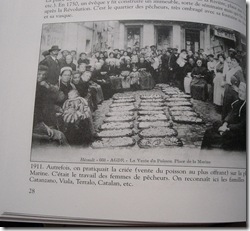
In the heat, one cool place - in more ways than one - to sit and talk or write is la Place 195de la Marine at the far end of the quayside, past the rather grand cafes bobbing about on their river pontoons. In years gone by this square was where the fishermen would land their catches and they (or their wives) would sell their wares.
But now la Place de la Marine is a dappled open space, lined with plane trees which shade blue tables belonging to a small, elegant cafe called Cafe Capitaine where charming people bring you coffee, wine, or fine food to fuel your thinking, talking and writing

Interestingly, inside the cafe is a very colourful, illuminated picture of a large boat. Before it is a small sailing boat where stand our own sailor adventurers, Nira and Allan and their black dog. (see Nira and Allan)

Even on the hottest day at this end of the quayside, you can rely on cooling offshore breezes, as well as catching the last rays of the sun at the end of the day. I’ve drafted chapters of the new novel here. I’ve watched children play independently in family groups, the big sisters and brothers taking care of the little ones. I’ve watched droves of visitors arriving on their bikes, or off the small ferry that works its way up and down the Herault and stops at this small landing.

The children play around the statue at the centre of the square - a creamy evocation of Aphrodite, spouse of Poseidon, the God of the Sea. She’s wielding a paddle and stands atop a globe of the world. This statue is dedicated to navigators who have set out from this place and sailed the world’s oceans.

My own current favourite navigator is a sailor called Jean-Victor CannAsrtolobeac, who made a voyage round the world in 1826 in a ship called l’Astrolobe. The Astrolobe story has royal connections: hoping to find the last traces of an expedition led by a Captain Lapèrouse, which had disappeared in 1788 in the Pacific, King Charles X entrusted the search to a Frigate, Captain Jules Dinant d’Urville. This Captain loaded up at Toulon on 7th February 1826 on the corvette L’Astrolobe with a crew of 80 men, one of whom was Jean-Victor Cannac.

Now then! This young man’s family owned the Maison d’Estella – the house at the centre of my new story! And the Cannac family lived in the house right to 1916.

We have direct information about nineteen year old Jean-Victor from his sailor’s ticket. He stands 1m60 tall, has black hair which covers his brow; the same colour eyes. He has an oval face, a large nose, a small mouth and a dimpled chin. These fine attributes, his qualities as a sailor, and his willing attitude on board, were much appreciated by the Captain who eventually named an unnamed Pacific island after him.

How can any writer resist all this? It is either another novel in itself … oh dear I might have to come back!… or perhaps I might just borrow Jean-Victor as a prime example of brave Agathoise manhood and plant him in the middle of my story - either in the present day or in 300AD .

As everything here, this is all very tempting for a poor writer….

Wx

**********

Work in progress from At The Maison d’Estella

AD 396

As he and his hefty mate rowed their way between lush banks of the river, away from the city, the curly haired sailor talked rapidly to his passengers about how to make the frail craft work for them. ‘You put your weight so, messire,’ he said to Modeste, ‘then pull back hard. Then pause. Let the water do some of the work. The flow of the river towards the sea will pull you back a little, but you will make progress if you row, steadily, steadily.’

Then he nodded at Tib. ‘And you, young man, you know how I taught you to use the sail when you were small? Test the wind, then raise the sail. But we won’t raise it yet, The wind will be better for you up stream.’ He paused in his efforts and the boat drifted back downstream. ‘See? In this sweep of the river the offshore breezes could drive you back out to sea, And there you will both be lost, lost to us all.’

*********

Tuesday, 2 June 2009

Of Loves and Fishes

I  have experienced for myself the love of a mother for her child, of a woman for her beloved, but this area of the Mediterranean coast is where, perhaps, the enduring nature of these kinds of love is celebrated most of all.

If one listens to legend and story, some time after the death of Jesus, 401px-Michelangelo_Caravaggio MARY JACOBEa boat landed here on this coast with a precious cargo. This cargo is variously described as three Maries – Magdalene, Jacobé, Salomé - as well as their dark Egyptian maid Sarah (later adopted by the Gitan as their own Saint); possibly also a grail or container of some sort; possibly the bones of Jesus the Nazarene; possibly Jesus himself, in the flesh, ready to conquer Europe with love.

In that first century at least, this Gaullish coast might have seemed to be a place of greater safety for the Nazarene travellers. Gaul, like Britain - though still under the sway of pagan Rome - was not so enamoured of the growing official emperor cult as other parts of the empire.

After their long sea journey these Nazarene visitors might be comforted by some similarities of life here, with their lives by the sea of Galilee: shouting sailors, milling fishing boats, women sorting fish, men hauling nets or mending them as they watched the river and considered the wind and the conditions.

I see four cloaked women huddled together on a quayside like that of prosperous Roman Agde, wondering what to do next in their quest for protection and safety. They would have had men with them. Some say Lazarus. Some say Joseph of Aramathea, stricken that his garden was the setting for those last dramas in the life of the charismatic Nazarene.

Towns along this coast abound with stories of these women - from St Maries de la Mere, to Rennes le Chateau all share elements of these legends. Agde has its own Marie story – the little village close by here celebrates a vision of the Virgin Mary whose prayers saved the city from the flooding by the River Herault. Apparently the rock on which she kneeled show marks of her knees. This is an important generic story here in Agde , as the fear of flood – l’inondation - here at the mouth of the River Herault is no mere legend. The town has flooded here more than once in living memory. The fear is very real. That miraculous image of the flood receding must be in everyone’s dreams in this situation.

From My Window (2) I came here finally to write a novel which I have planned and thought about for more than two years. I wanted somehow to evoke the timeless and the time-full magic of the place that had first entranced me. But nothing was pre-ordained. And actually living here, digging deeper and deeper into what I feel about the place has made the original ideas evolve and blossom in ways I could not have foretold. This is the outcome of sequestering yourself in a strange place for longer than may seem reasonable.

I have done my reading and thinking. I have two or three people who I know will play some part in the story. I have fragments of truth, fragments of legend and fragments of story in my head. With my character Stella, I am interested in then and there; I am interested in here and now. And I am interested in the layers in between.

And I have discovered a story – not explored before - that connects all of the above. But that’s a secret.

And now today, I have just been exploring part of the old city to use for a scene in the novel. It comes down now to two streets: La rue de L’Amour. (The street of love) and La rue de la Poisononnierie. (The street of the fishermen). I return very excited. This makes a curiously appropriate location for a story which is becoming more magical at every turn.

And on…

Doorway green

At The Maison d’Estella Work in Progress Extract.

‘That end of the town is more dilapidated than the rue Haute of the Maison d’Estella. I remember what Madame Patrice said. ‘…the poor gather there, of whom I am one. Bad things are said of them but they are wonderful people.’ I pass a rather grand restored house and then I count the wonderful doors, now battered and broken, that were once portals to grand town houses. Some are patched with plywood. Some are daubed in graffiti. On one door is a white handprint on the faded green paint. I wonder now if this has occult meaning. Perhaps it’s just some playful gesture.                                                    

 I try to make my way down a side street but two boys playing football, immaculate in a Nike strip, bar my way. Madame had told me   ‘…they look after their children, you know. That’s a good sign.’ The boys stand aside politely, football in hand, as I pass them. Then they smile knowingly when I return, having discovered the dead end. And I have to work hard to push to the back of my mind the thought of those other two footballing boys, locked up now in a cold British prison in a town in the north of England.

LinkWithin

Related Posts Plugin for WordPress, Blogger...