Showing posts with label inspiration. Show all posts

Monday, 11 September 2017

Back on Song, Spreading My Wings Again


This last year has been a bit of a health challenge so sadly I have not  got to comment on my blog or my Twitter to keep in touch with some great people who think about the world and write and read and let me know what they are thinking. 

Thankfully things are back to normal more or less normal now  and I am reading and writing at last inside my normal writing rhythm  and am two thirds of the way through very the first novella ‘Embarking 1941-1951’ in a trilogy called Lifespan which takes place between 1941 AD to 2,000  AD. Ambitious?   Moi?


So you might say in these months I have only been talking to, and creating for, myself, and that has had to be enough. But now I am about to spread my wings and start to sing again. Can’t tell you how good that feels. Like many writers, writing is not only what I do but who I am. Without writing I am nothing.


Regular readers here will know I am a great champion of the computer as a writer’s tool. It’s there alongside the Internet, the network of Libraries, story telling among friends and family, and a lifelong, well developed Imagination muscle.
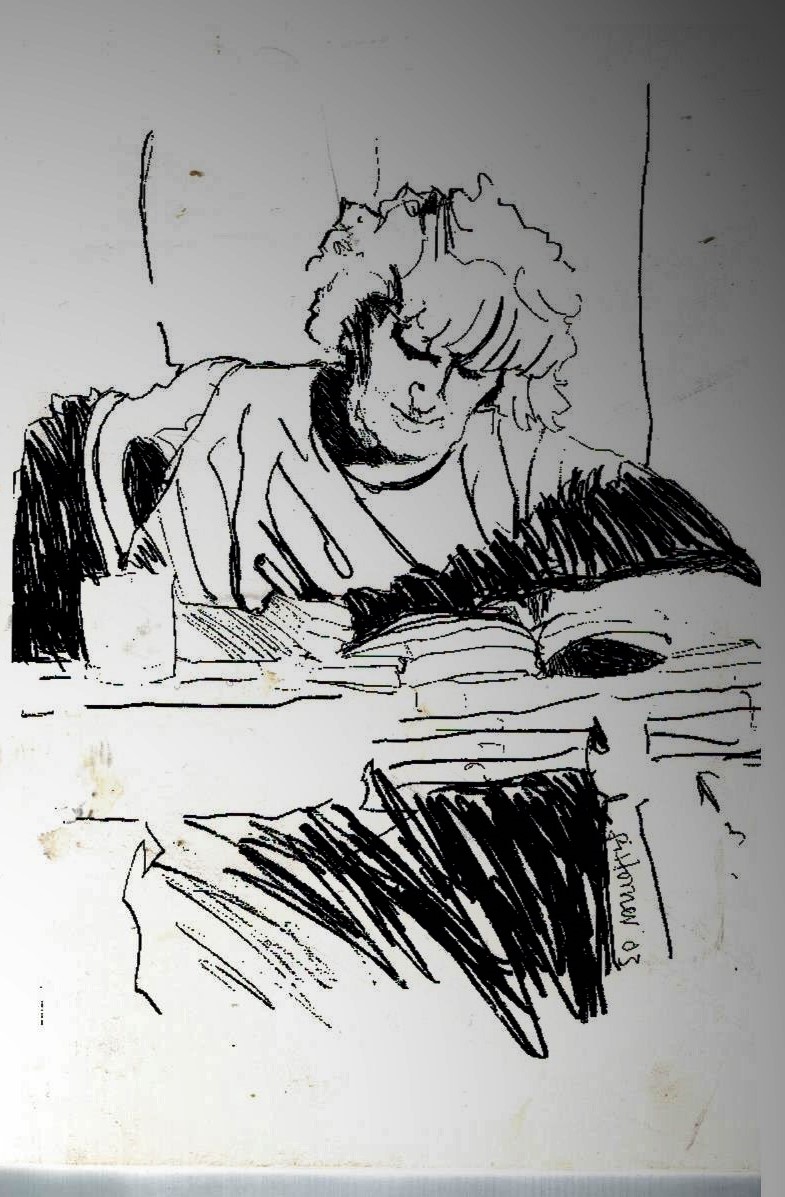
However the the longest lasting and the most unique tools are my ink pens and my spine-bound notebooks. I have more than forty of these. I can pick up any notebook and revisit the sheer adventure of building that story which was published ten years ago.walking alongside my  invented characters and following them wherever they lead me. into darkness and light. 

I was wonderful to hear writer Patrick McCabe  on BBC’s Book Club describing his process and insisting that the progress of his novel Butcher Boy came from inside the writing process  and how surprised he was when certain very dramatic things happened. I can very much identify with that.

Herein lies the originality and the energy of any good novel,  This is the antithesis of many present day novel - certainly  decently  written  but rather formulaic and targeted  at the widest market where the first principle is profit. This is not to denigrated my fellow  writers at all. Publishing seems to me to be exhaustively and exhaustingly  market-driven with books seen as products rather than works of art and skill.

But we write on.
When I was halfway through  Embarking 1941-1957 I stopped to make a list
of my characters – names, ages etc, This is so I can keep these imagined facts consistent like the continuity girl on a file. The list came to 25 characters, names and occupations. Admittedly there are only six or seven front line characters. But who knows where they will lead me?  Only time will tell.

More soon …


Monday, 17 February 2014

Character from Portraits: The Young Man in Hat

1926
 Painted by Laura Knight

Building fresh original characters from portraits is another way to add creative play to your writing process


As I have said here ad infinitum, observation is the key to good writing. As novelists in search of fresh, original characters we keep our eyes and minds open and observe people everywhere we go..It is important that we observed  strangers so that we may instantly add our own imagination and insight to what we see on the surface.

One good way to tackle this in a steadier, more focused fashion is to apply this method to observing great portraits - building character from portraits.


Here we add our imagination not only to  artist's observant eye but also her or his interior interpretation of a living human being.

On this page are two portraits of living beings.

It is important just to look and look  at the portraits. Use you eyes, your imagination and your mind. Don't check on the artist or on  her method. Don't consider the sitter's identity.

Just look at these portraits with your mind and your imagination. What do you see? How can you incorporate them into our imagination so that they emerge as an original character to walk into your novel.  Remember this is not an art-crit session, It is a writing session.


1910:
 Painted by Isidore Kaufmann

 How best to do this?


Take one portrait at a time and  write down answers to the following  the twenty questions - deal with each portrait separately No more that two lines for each answer.


  1.  What is the sitter called? First and second name please?
  2. Why is the sitter dressed in this way?
  3. Where is the sitters going  next after the business of the portrait is over?
  4.  What is the sitter  thinking/at this  minute?
  5. What is the sitter's greatest quality?
  6. What is the sitter's greatest weakness?
  7. Why are they having their portrait painted?
  8. How does the sitter speak?What is his/her tone of voice?
  9. What kind of houses do the sitters live in?
  10. What can they smell here in the studio? 
  11. What do they smell as they walk through their own door?
  12. Whom in their life do they love the most?
  13. Whom do they rather dislike?
  14. What os their favourite season?
  15. What is their favourite place?
  16. What is thier long held secret.
  17. Whom do thye most fear in life/
  18. What is the greatest risk they have ever taken?
  19. How do they see themselves?
  20. Make a list f the colours you see in ech portrait. 

What have you done? You have used the power of your imagination to invent their lives.


Congratulations ! Now,  springing from your notebook will be fresh characters who will move around in your own imagination of their free will and will add surprises and fresh energy to your novel. You have built fresh new characters from portaits by great artists. And there are so many out there...


Happy writing! wx

Thursday, 30 January 2014

All writers are dreamers, optimists, romancers. Read 'The Romancer'.

New Edition, Updated,On Kindle Now

My revised and updated my How To... book about writing, the  'The Romancer''  is on Amazon Kindle today and will be out next week as a new paperback. 

If you are a writer or wish you were, this book might get you going again or simply get you going for the first time.

If you get to read it and like it let me know. Share your own experience with me.  (Perhaps there is another book in there*...) 


It's not necessary to write a much valued review for me on Amazon, but truly that would be the cherry on the cake...


'Dreamers, optimists, visionaries, enthusiasts, escapists.’ Wendy Robertson declares that all writers are ‘Romancers’.  In this book she explores the way memory and dreaming have been at the roots of her inspiration for her fiction.  Here in 'The Romancer', aspiring and experienced writers will find writing processes and practical approaches – including her forty day plan for writing a novel – to re-imagine their own lives to inspire their fiction and develop their writing. '


* That would make an intriguing new anthology about writing wouldn't it?


Monday, 17 December 2012

Playing Truant in Cambridge

My view over the Master's Gerden
So close to Christmas it seems like playing truant to make a getaway to Cambridge with my writing friend Avril but we went without guilt. We stayed at Sydney Sussex College and my room overlooked the Master’s Garden. We ate hearty college breakfasts, had two decent dinners and otherwise dipped into Sainsbury’s – a mere step away – to make sure that we didn’t starve or go thirsty as we worked.


And work we did. We drafted, transcribed, discussed  then read out to try our writing in the air. I think we both achieved more than we would have at home in the domestic pre-Christmas flurry. 

Avril worked on completing a set of short stories with a very original format, reflecting her success in this field this year.  We have had many interesting discussions about the form and function of the modern short story. (I have a new collection coming out in the  Spring. 

But in Cambridge I was in the middle of that big heave of beginning a novel which sits in a particular historical time. This involves a kaleidoscope of research, thinking, imagining and transforming. My truant time in Cambridge has certainly made more clear for me the ambiguous, inchoate mass which is the foundation of this novel. Now it seems that I have made the great leap and think I may have the novel before me – not just that crucial first 20,000 words but in these four days of concentration the superstructure of the novel has emerged for me from the Celtic mists. 

No, we didn’t see ourselves as tourists. But yes I did notice the exquisite city of Cambridge. Its very fabric exuded the history, literature, philosophy and science which has formed the intellectual background for my auto-didactic generation, educated as it was in small colleges and institutions a world away from these exquisite temples of privilege.


My favourite building in this ancient city was the oldest church – a small church called the Round Church on the main road which leads to the Cam. I was excited about this, as - for this novel -  I’ve been   researching the round houses the so-called Pagan people of late antiquity before, during and after the Roman occupation. The fact that the road this church stands on was originally the Roman Road was the cherry on my research cake. I understand the design of the church was based on the Church of the Holy Sepulchre in Jerusalem. 

But for me – my mind fertilised by all this research - the atmosphere in the round structure of this church carried much deeper meaning and one way or another will have its impact on my novel.

As for playing truant - I returned home energised and guilt-free to embrace the delights of preparing for a family Christmas. I recommend playing truant to any dedicated writer. 


Two posts to come (also emerging from the Cambridge Getaway)
1. The Lithuanian girl on her way to China
2   Peopling Your Novel

Saturday, 9 June 2012

Sweet Suite Francaise Posthumous Triumph

Inside Cover: Irene's Manuscript
I would point out that in the Iconic reading group teased me that I read these books as a writer, not purely as a reader.  This is evident here, I think... I did protest to them that this was what I was: a writer!


Suite Francaise  - really a suite of two novels which might have grown been three -  was famously written by Irene Nemirovsky during the German occupation of France  before her removal in 1942 to Auschwitz and ultimate death. The rediscovery and  publication  of the work sixty five years later is a story in itself.

Irene - already a well known writer - embarked on the novel in the rural  village of Issy-l'Eveque where she and her husband and two small daughters lived, having fled occupied Paris.

I have just finished writing my latest novel - to be called The Art of Retreating - partly set in Occupied France and partly in the present day, so had read dozens of scholarly histories,  factual anecdotal memoirs and factual personal stories to get inside the particular experience of one of the six  main characters -  the aged writer Francine Costington.

I  kept Suite Francaise - at the far side of my table -  to read after I had finished writing my own novel.  This was because,  being fiction, this novel is essentially a secondary source; secondary sources are normally weak and can lead to thin storytelling and unconscious imitation..


Major novel Written During WW11
It turns out though that t Suite Francaise relates intensely to Irene's personal experience and could be seen to have memoir-ish insight, although -  as  I had to keep reminding myself as I read this triumph of a novel -  it was written living on top of the events it pictures. Also - very important for a modern reader - written with no fore-knowledge that the vicious tide of occupation of her country would recede and France would regain its sovereignty. She had no idea then that the Germans would not win the war.

The prose here is vigorous, detailed and full of energy. By page seven she has established the setting and the tensions and the place of pre-war Paris. She has reflected on the subtleties of the life and lifestyle of the different characters.

Material objects are important here. This involves lists: of what the mistress of writer Garbriel Corte  has to take  ... First she hid her jewellery ... over that she put some underwear, some washing things, two spare blouses, a little evening dress so she'd have something to wear when she arrived - she knew there would be delays on the road - a dressing gown and slippers , her make-up case and of course Gabriel's manuscripts. She tried in vain to close the suitcase...


(NB Gabriel's manuscripts lose the battle...)


And do read the  loading of Madame Pericand's car (Chapter 6 p 29 in my copy)  This is a masterpiece of listing to render great layers of meaning for the novel.

This is followed by this list '... groups of people appeared outside their houses - woman, old people and children, gesticulating to each other, trying at first calmly, then with increasing agitation sand a mad, dizzy excitement to get family and all the baggage into a Renault, a saloon, a sportscar...

This is a powerfully  French thick-textured novel  teaming with the people of Parisian  bourgeois society and their servants (often disrespectful) and their fellow travellers..

The languid, somewhat unpleasant character, writer Gabriel Corte, declares on page 16, 'A novel should be a street full of strangers, where no more than two or three people are known to us in depth.' But Irene Nemirovsky does not follow Gabriel's rubric; This novel sports a cast of dozens of people and by the time we have read the novel we feel we know many of these characters and share with them the annihilation of their bourgeois concerns. From the modern perspective it is poignant to overhear the discussion of the importance of keeping valuable carpet and furniture safe, of preserving the the inherited linen.

 By page 11 we are acquainted with all the characters, including Albert the ever reappearing cat and the aged grandfather of a family group M Pericand.who gets left behind and is later retrieved.
            'Nanny, my dear Nanny,' Madame Pericand groaned in a barely audible voice, 'We forgot ...'
           'What? What did we forget?'
           'We forgot my father-in-law,' said Madame Pericand, dissolving into tears.

So in the first book of the Suite Francaise - Storm in June - we have  people fleeing in refugee columns from the advancing Germans, stumbling along, attacked by low flying aeroplanes, meeting jobsworth guards at the crowded railway stations;  people who get lost, fade away, lose their precious possessions. The we witness many of them returning to an occupied Paris,. taking up their homes and their work where they can before the darkest side of the occupation begins to bite.

The second book here Dolce is an account of life in an occupied rural village - I imagine not unlike the village that was Irene Nemirovsky's refuge and where she began what would have been a greater, even more sprawling novel of France in World War 2, had she not been taken to Auschwitz.

What I loved about this book was:  the skillful, complex storytelling; the acute insight into the human motive which has relevance today; the wit and the lack of sentimentality; the energy and quirkiness of the characters and the fluency and energy of the prose rendered so well in this translation by Sandra Smith.

Highly recommended for readers and writers alike.


Monday, 15 June 2009

Powering Your Way Through a Long Novel …

It’s been somewhat weird, after a lifetime of writing books under all kinds of challenging situations, to create this opportunity here in France to write my novel in a single sequence of uninterrupted time – two moChanging Draftnths, to be exact.

When my very first novel was published I was working full time at a very demanding job . I also had a house, a partner and two older teenage children to take care of. Now and then I even had a social life.

In fact that first novel LIZZA was a young adult novel – but I didn’t know that. I had no idea whether anyone in the distant publishing metropolis would be the least bit interested in it. I wrote it when my daughter was fifteen-ish and it is based on a story from my mother’s life when she was fifteen.

I wrote the whole of LIZZA one summer vacation. (Academic life did afford such professional space at that time…) In my naiveté I sent the novel to two major publishers, picked at random out of the Writers and Artists Year Book. I really didn’t know what I didn’t know! But neither did those (now delightful) metropolitan people. The first publisher said yes but would I make some changes? The second said yes please we love it. And I was away.

Changes, Changes

Today, the story I am writing here in France is about the nature of miracles. But LIZZA was my first personal miracle. In a remarkably short time it was in hardback then in paperback; it got some good good reviews, was in print for a good number of years and was in libraries being borrowed for at least ten years.

That was a good number of novels ago. Any writer will tell you that each and every novel has its own special story, but that first success, like a first real sweetheart, remains a very precious memory for me.

And now, this new novel, which I am writing here has its own extraordinary Sunday 13 105 story. It was inspired by a very special place, a dramatic time, and some extraordinary coincidences. I have researched it for two years, I have imagined it, thought about it, and dreamed it.

It was the need to write this novel that inspired me to organise my life to come here for two months, to rid myself of other (sometimes delightful) duties, obligations and responsibilities and try to write the whole of it here - just as I wrote LIZZA all those years ago in one summer vacation, in one great glorious blast. The rule here in France has been no domestic constraints, no newspapers, no radio, no TV, of any kind. Just explore, think, feel. dream. write and be!

Well, as you may note from my brief ‘work in progress’ abstracts in these posts, I have been getting on with it. The influence of being here and writing the novel has been inspirational and amazing, but hard to quantify. Important to the success of this process has been working alongside my writing friend Avril and (for part of the time) my writing daughter Debora – both working just as hard on their writing projects. Working alongside like souls definitely keeps you going – workshop of two or three it you like

Has it worked? It certainly has! Is there a novel here? There certainly is! Two weeks to go now, and I have a draft of the novel, having had just two scraps of writing when I came. This draft is a worked, not a rough draft - one hundred and forty pages of typescript and the rest in ink in my two big drafting books.

I get impatient with the typing; I find that transcription keeps me back, it dogs the inspiration. Onto the screen too quickly, the prose is too deceptively finished, inaccessible to change. I like my drafting books, written only on the right hand side, blank on the left so I can scribble comments corrections, suggestions, annotations and alterations to my heart’s delight. It looks quite a mess, but is much more an image of an imaginative thought process than a neat screen too full, too early, of text in 12 point Times New Roman.

So, you may say, you have this novel in a few typed pages and two big, scribbled-over drafting books. All those changes and that self questioning! Isn’t all the work to do? Transcription, editing, shaping, cutting and pasting. consistency, syntax…

Drafting Charoscuro

Well, yes and no. The hardest part - (nearly!) done – has been imagining this extraordinary story, reflecting the surprises and the true magic that so moved me on that original inspiration.

The easy part is to come - working on the novel at home under more ordinary and familiar conditions, to get these more workaday details right and the novel itself in really good heart for many readers to enjoy.

As with LIZZA, perhaps the miraculous best is yet to come…

wx

PS What will it be called? Miracle At The Maison D'Estella. Probably

LinkWithin

Related Posts Plugin for WordPress, Blogger...