Friday, 21 September 2012

Writing, Talking and Ghosthunting on Holy Island

A few days away with like-minded friends can be very refreshing. I remember a very fruitful time at Annamackerig on the Irish border, (where I saw a ghost...) While I was there  I drafted many of the short stories that later, transformed in some ways, were welded together in Paulie’s Web (see sidebar) now on Kindle and being enjoyed by those of you who like something different. You couldn’t get much farther away from prison than that idyllic place beside the lake full of merry musicians and inspired, surreal writers,

Then there was that time on the Scottish borders with the late great Julia Darling and the mistress of MsLexia Debbie Taylor. Julia was working out what proved to be her last novel The Taxi Driver's Daughter.  That was a funny, very female sojourn with lots of writing talk and (if I remember rightly)  a bit of reflexology.

Anne's Photograph
And now I have just come back from a very refreshing few days with writers Anne Ousby, Erica Yeoman, Gillian Wales and Avril Joy - first on the coast by Dunstanburgh Castle, then an afternoon, a night and a day on Holy Island.

This involved much inspired writing-talk and inspiration, active photographing and even writing. Erica was researching her new historical novel which is partly set on Holy Island. (She and we were disappointed at not hearing the seals singing. But we writers can always use our imagination.)

Gillian's Photograph of Gertrude Jekyll's Garden
The other three – very informed gardeners - visited Howick Gardens and the exquisite Gertrude Jekyll garden on Holy Island.  I looked and looked at the bright sky and and the glittering tourquoise sea and thought about ghosts – but they were as rare on these days as seals singing.


But over lunch Erica told us a true ghostly experience which winged its way right into to my notebook. We talked about Anne’s new website and urged her to love doing it. We also brainstormed with her a very original idea for a specialized blog which might come off. It is about gardening – and judging from the popularity of Gillian’s website it should be very well appreciated. We talked of Avril’s new newsletter which is full of great writing advice and also gives writers a range of competitions which can enhance their audience.

It’s always illuminating fun and joyful inspiration to meet, talk and work with writer friends of this quality. Of course it can also be physically and psychologically dangerous – which is the theme of my forthcoming novel The Art of Retreating. (See earlier posts here &   here &;  here,     But that novel is set in the Languedoc. Of course …er ….that is fiction. But it could never have been written without my wide and varied experience of going away with people to write, talk and think

Have you, like Erica, any experiences of (not neccessily  belief in…) ghosts that you’d like to share? Email me if it’s just too weird to comment here email me (wenrob73@hotmail.com)

Thursday, 13 September 2012

Remembering Iris


My time in London with daughter Debora was fun. She is working on a new book and planning the launch  of her marvelous ( mother's pride...) book Gifts from the Garden on the 20th. 

We sorted out some papers and she handed me  a paper with a rather dark, long poem of mine which I'd entirely forgotten. Reading it again I remembered the girl who was its  inspiration - a friend I had when I was nine and she was fourteen. She used to call for me many days to come 'out to play'. Even at that age I thought her home set-up was puzzling. In retrospect her friendship with me was equally puzzling.I now feel that in writing this I was recovering some memory. 

The poem was first written in 1996.  I have edited it further to post it on the blog. It's still dark...

Hope at least you find it interesting.Wx

Remembering Iris

 Men open their wide mouths
teeth bite, bite like lions - 
soft hands, smooth pussy paws -
only going for the cream
lapping it with sandpaper tongues:
blue eyes, large black irises

In the house of her aunt and uncle
is a girl - dreaming, putty faced -
and on her bed  a bedspread.
whose white hanging-down  tassels 
vanish one by one
bitten off by pussy cats, they say.

Their house stands in our row -
Jerry-built like ours, fenced with chicken wire -
although unlike us they have no chickens
The aunt and uncle have red faces  
his more bulbous, hers sharp with make-up,
her hair all yellow feathers, sides upswept.

My father - prone to bad mistakes -
buys a dozen chicks for breakfast eggs.
and on a string above their fluffy heads  
he swings his wedding ring to sex them.
But his ring swings to the left and
tells us they are cocks, every one

No morning chucky eggs for us!
Still, we feed the chicks, clean their cage
cluck over them. But, come Christmas, 
we choke them. Not my father - all soft heart -
but my uncle who smiles as his strong fingers   
squeeze out their little chicken lives.

And by Christmas Day the dreaming girl
has palmed her savings, run right away.
Her aunt calls her a sly cat –
bad to the core  and so ungrateful –
as she burns the bedspread in the garden
fenced all round  with chicken wire.

© Wendy Roberton 1996/2012


Saturday, 8 September 2012

Talking With Prison Writers Under a Clear Night Sky

The Indefatigable Pauline...
I arrived in London after a weekend in deepest mid Wales spent with other ex-prison writers in residence, before the induction week for new writers in residence for prisons. I was there at the invitation of the Writers in Prison Network, http://www.writersinprisonnetwork.org/. This is the  brainchild of Clive Hopwood and Pauline Bennet who work indefatigably to introduce into some fortunate English prisons energetic, creative people - writers, poets, film makers and storytellers - to leaven the mix of prisoners, teachers and officers and to offer something new and inspiring into these complex environments.
In my experience, the writer in residence can to a smaller or larger extent change lives. See here and here .

We stayed in an ancient extended farmhouse deep in the Welsh countryside - atmospheric to say the least.  It was good to talk to Steve a short story and historical writer now working on a book about a circle of friends of Conan Doyle - a kind of crime club where gentlemen read to each other papers about their own amateur sleuthing.
And also Andy, just appointed as a writer in residence in a men's prison, and wondering what he was in for. I recommended the short stories of (very blue collar macho...) Raymond Carver to inspire his students and Stephen King's On Writing to help them get inside the head of a writer. All quite macho of course. But that can help in a men's prison. (Look at Raymon Carver's What Do We Talk About When We Talk About Love?) 

And there was Sheilagh, who is about to go into the prison where I worked as a writer in residence. I told her she would enjoy it and find women to support her as they mostly support each other.
Clive and Pauline were recording short interviews for their developing WIPN website and I was asked for my top tips for new writers coming into this project.

I can't quite remember what I said but on reflection this is what I should have said:

1. Keep a very open mind.
2. Like the people you meet - this includes both prisoners and officers, some of whom do an amazing job
3. Don't get too fascinated by crime - don't identify your students by their crime  - move on with and for them.
6. Tailor your provision to the needs of individual students, not the needs of the institution or your own need for certain creative outcomes. Yes, I know this takes a certain amount of savvy and subtle political manoeuvring. But from experience, I know it is possible.
7. Always keep up  with your own writing and creative work. Read it and share it with your students. Write alongside them. (Risky I know, but they are taking a risk writing aren't they, writing for you?) In doing both of these things, you are showing proper respect and respect goes a long way in prisoners.
We were invited to take advantage of a outdoor hot tub at the farm but I am sure to everyone's relief I wasn't moved to disrobe.
But I did have two great treats.  One was a lady invited by Pauline who treated me to a hot stone massage on the Sunday morning and told me I had wonderful skin.

The other was the wide, unpolluted night sky of mid Wales which was pure and very grand. A good scene for a story or an inspiration for a poem.


PS For those out there who, as individuals or institutions, have long pockets or philanthropic inclinations Clive and Pauline are always searching for funding this remarkable project. Contact them at http://www.writersinprisonnetwork.org/.

Wednesday, 5 September 2012

Sweltering under the Paralympic Sun

Inspiration

Catapulted from sleepy mid Wales to central London -

I am now sitting in a leafy city garden eating gourmet avocado salad and drinking white wine. Overhead yet another jet flies by. Debora, the maker of said gourmet salad, tells me that for this month there have been more  jets directly overhead because the nearby Olympic stadium is a no-fly zone.


Despite the jets it feels green and peaceful here, like many surprising pockets of central London which confound the stranger’s expectations of a dark and dingy city. The new people just moved into the flat next door are working on their garden and Debora tells me of a man in a house nearby who has two beehives on his house.

We are somewhat exhausted today because we spent yesterday being roasted under hot sun watching wonderful athletic feats by remarkable paraympian athletes in the packed Olympic Stadium. This was smaller, more intimate than I'd expected. From where we sat we had a good view of the track events and a fair view of the long jump and the shot-put. Well edited television coverage obviously expands the whole shebang and makes it seem larger than life to the people at home in front of their television.


But I now know to be there was to apprehend a culture that was indeed larger than life, to witness the greater reality of the occasion. And this was not just about seeing the stoical, gifted and focused athletes competing before us, making us all more determined to try harder in our narrower lives. It was also about the crowd – lots of local voices and images reflecting our modern culturally diverse capital city alongside other faces and voices from the world. And so many families with children on the last day before schools round here began: children running up and down the aisles having fun, or being photographed against the arena, the Olympic flame in the background - historic images for the family albums.

The medal presentations seemed to come thick and fast, the massed audience applauding and standing up for winners from every country. One older man nearby stood each time to military attention, his thumbs to his trouser seams. I couldn’t stand up as my ankle was playing up a bit. But I was standing up with them all  in my heart.


And it was especially sweet at the end of the session to applaud David Weir when he was presented with his gold medal. If the beautiful stadium had had a roof it would have lifted as the whole crowd joined the athletes singing our own national anthem.

All this and wild flowers too...


NB THANK YOU TO DEBORA'S SEAN FOR THESE LOVELY PHOTOGRAPHS.


Next - scrolling back to my weekend  in mid Wales with prison writers


Sunday, 26 August 2012

Dialogue in the short story: Top Tips from a novelist (2)


 As I embark on my short story collection called Paint I am reflecting on the crossover skills between the long and short writing forms. Today it is the role of dialogue in fiction.


Thinking of the story
 Dialogue has its part to play on both long and short fiction. It presents very common problem for new short story writers and novelists 

Dialogue is hot and hard and challenges the reader not just to imagine, but to hear different voices, It allows us to witness aggression, seduction, passion and anger and the nature of relationships without having to be told that this is happening. What is happening hits you in the face. Look at these writers, What do you witness happening here?

Look at  Why Don’t You Dance? by Raymond Carver 

and observe  his ability to imply risk and jeopardy through what seems like simple dialogue.

…He sat down on the sofa to watch. He lit a cigarette, looked around, flipped the match in the grass.
The girl sat on the bed. She pushed off her shoes and lay back. She thought she could see a star. ‘Come here, Jack. Try this bed. Bring one of those pillows.’ she said.
'How is it? ‘he said.
'Try it' she said.
He looked around. The house was dark. 'I feel funny,' he said.  'Better see if anyone’s home.'
She bounced on the bed. ‘Try it first,' she said...

Or look at Daphne du Maurier’s Don’t Look Now 

where she uses dialogue to set the tone of mystery, threat and personal grief near the beginning of the short story. . 

…‘They’re not old girls at all,’ she said. ‘They’re male twins in drag.’ Her voice broke ominously, the prelude to uncontrolled laughter, and John quickly poured some more Chianti into her glass.
        ‘Pretend to choke,’ he said, ’then they won’t notice. You know what it is – they’re criminals doing the sights of Europe, changing sex at each stage. Twin sisters here in Torcello. Twin brothers tomorrow in Venice, parading arm in arm across the Piazza San Marco. Just a matter of switching roles and wigs.’
         ‘Jewel thieves or murderers?’ asked Laura
          ‘Oh murderers definitely. But why, I ask myself, have they picked on me?’
           The waiter made a diversion by bringing coffee and bearing away the fruit, which gave Laura time to banish hysteria and regain control. …


In my story Sharpening Pencils I use dialogue

to show the uncomfortable contact between a shy girl and her equally shy tutor. I think.

...The girl stood back from the painting and surveyed it. Mrs Forrest came to stand beside her. She said. ‘I do like the way you manage to convey both humanity and abstraction, Miss Wintersgill. You hold onto the intimate relationship while making the meaning universal.’
The girl undid and redid her ponytail, filling the air again with the smell of turpentine. Mrs Forrest contemplated the thought of turpentine infusing the curly tumbling hair. Then she said. ‘I can indeed draw quite well. They told me so at the Slade, many years ago.’
‘You were at the Slade?’ 
Mrs Forrest laughed. ‘So I was. As I say, it was many years ago. I worked alongside people who now are what thy call household names.’
The girl coughed. ‘It must have been hard work there.’
Mrs Forrest noticed the accent for the first time. Somewhere from the West perhaps. She lifted her shoulders and sighed. ‘For the first year all I did, dear, was sharpen pencils, clear workspaces. I did draw at night. That eventually earned me my place. My night drawing earned me a place there.’ She paused. ‘Not that I was very good.’
‘It’s hard to think of you just sharpening pencils, Mrs Forrest.’
Mrs Forrest smiled showing discoloured teeth. ‘Of course I watched what they did and in my little room at night I tried it all out myself.’ She looked around. ‘Just as, perhaps, you do here, Miss Wintersgill, in the dark of night. But then you are so much more original.’ She backed away then, fading out of the room and closing the heavy door behind her with a click. Outside she untied Koppy and let him run through the darkened parkland around the house, barking now and then when he scented prey... 

And in this story, The Little Bee I have tried 

to show the world of a little girl observing the complex and ambiguous world around her. Clearly here I am unable to resist contextualising the dialogue in the larger narrative. But perhaps there is room for that in the wide world of the short story, I hope so.

... Amalie put a hand on my shoulder and I stood up before her. ‘And your Mama was very beautiful, ma p’tite. I knew about that. Hadn’t I been her dresser in the Theatre de Varietés? The sheer beauty of your mama drew great applause.’
My father giggled then. ‘But unfortunately she could never remember a line. Not a single line. The manager who had been intoxicated with her became embarrassed and employed beauties with more brain and better memories. Her friend Josephine was one of these.’
Amalie suddenly scowled at him. ‘But after all when you met her, Monsieur, you fell in love.’
He sighed very deeply. ‘So I did, Amalie. So I did.’ And with this he laid his head on the stout oak table and fell asleep, snoring and snuffling within minutes.
My gaze met Amalie’s and - both embarrassed and amused - we started to laugh. She hugged me tight and I could smell the meat and garlic on her. And my father’s fruity cigarettes. Still laughing, I helped Amalie to trundle the trolley through to the dark back places of the house, where her two nieces, who couldn’t speak French at all, washed the pots and dishes and cleared the kitchen for the following day.

As always you should make your own judgement.


? Why not try these …

- Abstract some dialogue 

from an existing short story – separate it on a page – and decide what you are doing here. Can you cut it back to just what is spoken? Can you implant more meaning, enhance the tone, and expose the difference in the way people speak by what they say?


- Take a one line encounter from your story 

and render it into dialogue which gives us more of the different lives of the speakers without telling us facts.


- Take an overheard fragment of the conversation of strangers 

and create a whole incident though invented dialogue 

Happy writing!
wxx 


@


Friday, 24 August 2012

Top Tips From a Novelist Writing Short Stories.


Even after so many novels I can’t begin another one until this existing one is properly ‘put to bed’. On the other hand I am not properly happy or resolved unless I am weaving stories, small or large.
So, while I am awaiting news of my new novel from the publishers I have decided to stop biting my nails and write six short stories around the theme of painters and sculptors. In reviewing my novels (here) lately I am reminded how often I the umpulse to paint re-occurs in my fiction.
Man in tree - Short story inspiration
This could be because I once briefly trained in and taught art and find many useful analogies between writing and art, For instance in The Romancer (or click on sidebar for Kindle) I  compare the large scale planning of a novel to blocking in a canvas. I have found that a number of writers have emerged from the art world. There is a serious kinship here.

In this ‘Paint’ project, for technical and creative inspiration I have gone back to the sublime William Trevor, the cool RaymondCarver, the elegant Scott Fitzgerald and the dark Daphne du Maurier. I would recommend these writers to anyone embarking on the writing adventure of  the short story.


Their works have inspired me to think of:

- The significance of the title: think of Carver’s What Do We Talk About When We Talk About Love; think of Du Maurier’s The Birds.
- Staying tight: every word must be a bullet  right to the heart of the meaning. This is even so if the prose looks casual or informal.
- The power and pertinence of title in combination with the first lines as they charge right into the story.

Now - putting my money where my mouth is - here are the titles of the first four stories with their first lines.  See what you think:


Short story 1. Wraparound
Using the invisibility afforded by the wide brim of her hat and her wraparound sunglasses the woman kept watch on the man on the rickety stool. He was painting on a small canvas clamped on to an equally rickety easel jammed against a rock, on top of which was parked a red coffee bowl.
    The man’s looks were unexceptional: dry skin creases of an ex-smoker; wispy grey-blond hair; nut brown skin;  whipcord muscles etched into long thin arms. She watched him as he stared for long minutes at the long beach and the sea and then – his brush held by the end, like a sword – he dabbed a spot of paint on the left hand side of the canvas…

Short story 2: The Little Bee
You ask how I met him? That you need this for your book? Well, it started very early mademoiselle.
    My father used to draw me as a child. He sketched my chubby feet. He outlined my roly-poly body and filled me in with pastel, rubbed hard - red, white and ochre with green in the creases. Alas it was a losing battle. The emerging face was always far too old for a baby. Those works remained hidden...

Short Story 3: Sharpening Pencils
Mrs Forrest always called her students by their formal names. ‘Miss Montague, your line is improving. Flow, dear. All is flow!’ And, ‘Miss Clark you must look for the light. Do look for the light, dear. Don’t imagine it.  Do make the light work for you.’
Mrs Forrest’s domain was a long chilly room - the ex-laundry of a large castellated house, once a great manor house, then a First World War hospital, then a psychiatric hospital. Now it was an obscure college for girls who – for one reason or another – had not made the grade elsewhere.

Short Story 4: How I Became a Painter
… The house was awash with Harry’s drawings and paintings pinned on chairs and cabinets, on walls and curtains. Each painting and drawing that Harry had made since he was eight or nine was on display in the narrow house. Thomas realised his friend was telling the world ‘This is me!’ in defiance of his father who’d never been comfortable about his son’s soft habit of drawing every dratted thing he saw. Boots, machines. What good’s such things, lad? Useless. The workings of a marshmallow mind. His dead father’s thoughts vibrated in the room now defied, contradicted by the rough papers and boards pinned around the room….

The Fifth Story will be about the impact of the prison art room on a woman prisoner

The Sixth Story will be about a painter who photographs a man cutting down her tree and the emerging disputes that define the space between them.

Suggestion!

Why don’t you plan a set of short stories around a theme? You could put them one by one into competitions, or keep them in a collection for publication either on Kindle or in more conventional form. The theme allows them to build into a coherent body of work, which is intrinsically satidfying for any writer. They could also be a showcase for the development of a novel around the same theme,

Happy writing!


For inspiration about short story success check out Avril’s blog.http://www.avriljoy.com/tag/tania-hershman/

© Wendy Robertson 2012


Friday, 17 August 2012

Novel Marathon 7: 1960s Factory Life as Inspiration


Unusual Friendships in the 1960s

Sandie Shaw  and the Millionth Marvell Cooker - The facts behind the fiction?

The Story of a Story -

This novel is about three women who meet on a cooker factory production line in the summer of 1965 when singing sensation Sandie Shaw comes to present the millionth cooker to one lucky customer.

But what, you may say, are the facts behind the fiction?  Factories - the manufacturing base of our economy before it was stripped away by politicians - get a poor showing in fiction and drama, appearing as unpleasant places where only unthinking people work.


I knew - and know different.

I was truly lucky in that as I wrote this novel I could draw on many facts from my personal experience.  


 Spennymoor, where I grew up, was dominated by Smart & Brown’s, a very successful domestic appliance factory which later evolved into Thorn’s, then Electrolux. All around the county mines and steelworks were closing down, so this so-called light engineering factory was not only a lifesaver, it preserved a community that would have just about died out.

The factory I knew was a driving, buzzing, exciting place. In the Sixties more than two thousand people worked there, so it was no small enterprise. At one point my own mother, brother and sister worked there.  I worked there myself in my college vacations. I later met a man who worked there, and, (to quote Charlotte Bronte) reader, I married him!

So all my life I have been witness  the comedies, the tragedies, the mirth and the malice of this extraordinary place, this welter of stories,  this common memory of people my home region. What’s more, I have enjoyed a very privileged inside view.  There is a literary snobbery about factories and the people who work in them, So often in fiction and in documentaries factories are alluded to as dingy, hopeless places, where downtrodden, exploited workers do boring jobs. Not so here! I knew from experience that this factory was no stereotypical satanic mill, or boring workplace: it was as fascinatingly complex and as buzzing with stories as any lawyer’s office, government department, or college campus.

Of course, to outsiders it could be an alien world. Here is the first view Cassandra, my central character, has of the Marvell factory:


'... At the factory gates the streams of workers, flowing from the dozens of of buses, merged into a river of people, pouring down the walk-way towards the flat grey hangar-like buildings that encompassed the great Marvell enterprise. I had to stop to take it in. Of course I’d heard about this place from my mother. And I’d seen it many times from the bus on the main road. But up close it was another thing: bigger and dustier, kind of seething with some life of its own. 
Straight ahead this long, high loading bay fronted the big cooker building: a big wagon was already parked there, its rear doors wide open. Two boys in warehouse coats over their drainpipe trousers were sitting with their legs dangling over the edge of the bay, having a last cigarette before they started and whistling appreciatively at the best looking girls as they passed.
‘Come on, Cassie!’  My mother nudged my arm and led me through a door at the side. While we stood in the queue waiting for her to clock I blinked round at in the inside of the building  and caught my breath.  Here the building was twice as big as it seemed outside. The long production lines stretched into the distance, overhead wires looping down like so many spiders-webs. No machine sounds. Just the echo of voices.as hundreds of people trickled towards their station, muttering, laughing, dumping out their cigarettes...'

I always knew I wanted to write an authentic tale about factory life. I tried for years to think of a way of doing this. But what I need was a single incident on which to hang my story. Then one day an insider recounted a legend to me, that amongst the other grandees who visited this important local factory to celebrate its success in the Sixties, Sandie Shaw had been there once, to make a presentation. I was truly excited at this, as this elegant iconic figure somehow expressed for me the optimism and surging creativity of the Sixties.

At first I thought it might not have really happened. But an article I wrote for The Northern Echo brought an email from the man whose very elderly auntite had been presented with a cooker by Sandie Shaw, So I was reassure. But my own fun was magining the impact of such a visit on just such a factory, which in this novel I have fictionalised as Marvells. In doing this I join the company of other writers with recent and projected plays with fictional references to the living Tony Blair, Messrs Brown, Blunkett & Prescott, and now even Margaret Thatcher. There are novels with fictional allusions to the Royal family – that one by Sue Townshend for instance,  about the queen living in a council house and then there is Alan Bennet’s  surreal ‘The Uncommon Reader’ about the Queen joining the library. And of course there are many fictional allusions to Elvis, but then he is no longer with us.

So, in my novel, Sandie is there in spirit and then briefly glimpsed from afar. The only time she is front stage is when she meets her worshipping fan Karen presents her with flowers:

'Sandie Shaw’s wearing these patent pumps with tiny heels and   is certainly tall, taller than Mr Cartwright the sales manager, and as tall as Mr Priest, who is hovering at her elbow with a  grin on his face as wide as Tynemouth   She looks young, younger than Karen even. Like Karen she’s wearing an A line dress, but hers is in swirling greens and blacks. Her hair is down, her fringe too is swept to one side and pinned with a slide.  She has these enormous eyes in a pale face that is pretty and strong at the same time. Strange though, there is this aura around her, like she is in the spotlight, although there isn’t one here on the factory floor.  The women applaud as she passes. Some of them shout and say, ‘Hey Sandie!’ ‘Take off your shoes, Sandie!’ And ‘Give us a song, Sandie.’ It’s as though they all know her personally.
It’s really weird.
The entourage slows down when it reaches us and Karen steps up to hand Sandie Shaw her bouquet. Sandie passes the bouquet to the smartly dressed woman beside her, shakes Karen by the hand and asks her name. Then she looks her up and down and says with a warm, broad smile, ‘For a minute I thought you were me!’

Although Sandie is very important to the novel in terms of being a symbol of the times and is significant to the characters in terms of their own identities, her only role here is as a brilliant  icon. It is what she represents, not who she is that is important to the factual basis of the novel.

This imagined event, with Sandie as a fairy tale figure just glimpsed from the sidelines, is at the core of the story.   My novel would be built around  the week at Marvell’s of such a great event. Sandie Shaw – that ultimately mysterious Sixties icon – would be a catalyst in the lives of my characters; the young Cassandra and Karen, and the older, more worldly wise Patsy.   

The first version of Sandie and these imagined events was as a play. I had this image of a production line rolling down centre stage, of back- projections of Sandie and Elvis in song, alternating with heaving halls of Rock’nRollers!  (One potential director mentioned the cost…) The Play nearly happened, but when I realised how much collaboration and compromise it would involve I backed off, deciding I really was the cat that walked by herself.  Only a novel would do.

So the novel finally emerged from the play like an explosion from a catherine wheel. The great thing is that as I wrote Sandie Shaw and the Millionth Marvell Cooker, I was able to play, in turn, the writer, producer, director, and all the characters.  It’s pure fiction, of course, but each element of the novel is based on lovingly known facts of that place in those times and is a tribute to the fine people who worked in a real factory and live a real Northern town.

And, as I say, it is a tribute to Sandie Shaw and all of us who were young in those innocent days.                                          


  -----( The ideas behind this post come from and article I wrote for the Northern Echo when this novel first came out....)


Tuesday, 14 August 2012

Quaint People: Travel as Inspiration.

I just came across this: scribbled as a blog in my notebook when I was in Ireland. As I have just  written about Castletownshend and Edith Somerville I thought this note deserved to be transferred properly from my notebook to this blog.


Tools of the trade,
'How I love to travel and stay! And when I am in any place I love to try and understand its nature by dint of a little looking, a little reading, a little thinking, a lot of empathising.

My mission when staying in any place is as a writer, not an historian or an anthropologist (although I do enjoy dipping into these disciplines). 

So, inevitably in my life I have been  tempted to write about these places. I travelled to the Languedoc for five successive years and out of that came  Englishwoman In France and then my just completed novel, The Art of Retreating. (Extract) (Another extract here.) I have also just finished a long short story which is set in those regions but is cooking on the back boiler and has not yet seen the light of day.

These are all clearly works which would never existed had I not traveled, stayed in and loved France.   

Now  I find that  it's Ireland's turn to become my source of inspiration.  

I have just reminded myself that earlier times in Ireland inspired the beginning of my novel Under a Brighter Sky. * Also article here  In that novel the family walk out of a distressed Ireland and take a boat to Liverpool. From there they walk to North East England to find work in the railway shops of Shildon and to participate in the Industrial Revolution on the English mainland -  just as others migrated to the new worlds in the United States of America and Australia.

What they left behind was a country virtually untouched by a significant nineteenth century leap into the modern world. The  residue of colonial domination underpinned by military power meant that for a time the minority ruling class could live on in feudal style increasing battered grandeur which on the surface did not value the vibrancy of the original Gaelic culture and the succeeding Norman-Anglo-Irish-Culture. These people may never have been to England or, in visiting, be seen as quaint Irish incomers enriching the literary and artistic life of London. But they were loyal to the Crown and their menfolk fought in many wars in defence of that Crown which they saw as their own.

 Even after the evolution of an Ireland free of English domination, deep in the countryside these obsolete set of values and attitudes ticked on, survived in pockets to a quaint and remarkable extent, These were people obsessed with the countryside, hunting over wild land, knowing and loving their dogs and horses as well as and more than the country Irish around them.

This unique life  as I said in my last post (below) was documented beautifully in the stories by Somerville and Ross. In its later more battered stages it is reflected in the wonderfully spun stories by Mollie Keane such as Good Behaviour.

Of course there are many gifted modern Irish writers of great repute whose novels enjoy universal literary acclaim. But I find myself fascinated by those ambiguous times when what it was to be Irish was such a mixed bag. There must be a new story for me there.  Perhaps I need to travel to Ireland a few more times to find it...' 

NB Written in the Customs House in Castletownshend, Cork.


 *still on Amazon in paperback and will be available on Kindle in September.

Monday, 13 August 2012

Irish Magic: Catching up with Edith Somerville

Elegant MFH
Edith and Violet

One of my reading treats on my recent stay in the West of Ireland  - apart from reading about pirates and white slavery there in then18th Century - was to catch up with some books about and by the fascinating Edith Somerville and Violet Martin Ross whose families had been on Ireland for hundreds of years...
Edith talkse about their method of collabaration as being conversational ...

 Click: More about Edith and Violet and their important books on my Love Affair With Books page

Monday, 30 July 2012

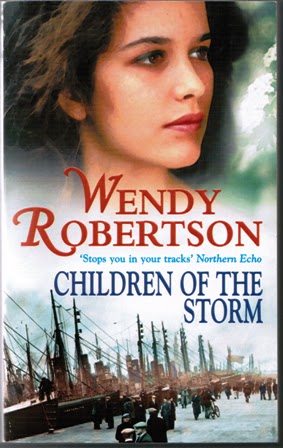
Children of The Storm; Stage Six in My Novel Marathon

Second in Kitty Rainbow Trilogy
Click to obtain

How does a trilogy happen? In my case it certainly was not planned. 


When I completed the novel Kitty Rainbow instead of the sense of closure which can come at the end of a novel I was haunted by the still powerful presence of the charismatic and complicated Kitty Rainbow. There seemed to so much story untold.

I was compellers by this feeling made me to embark on a sequel with the idea that this novel should stand alone, apart from Kitty Rainbow but could also be read in sequence. Hence I embarked on my only trilogy.

So it happens that Kitty Rainbow emerges again, dominating the background of Children of the Storm. Kitty learned her lessons in life from retired fighter Ishmael Slaughter and has become the proprietor of Rainbow and Daughter a very successful draper’s shop in the Durham market town of Priorton. She is life partner (but never married – very scandalous in those days) to William Scorton inventor and manufacturer whose factory in this novel has been turned over to the making of shells in the Great War.

In the foreground of the novel are her stepsons, Samuel, Michael and Tommy, and Leonora and Mara, her children with William.   Taking place between 1915 and 1921 the novel tells the story of this complex family, set against the dramas of war on the home front, on the Somme, and on the bloody Russian Front where Russia is slowly disintegrating into full scale revolution.

In her fifties now, Kitty is very involved with her business, William has retired to make clocks and invent a signalling mechanism for railways, middle-aged Michael is running the armaments works, Left-thinking thirty eight year old Samuel is in Russia writing journalist, acting as a go-between and perhaps a spy, thirty seven your old Leonora is working for the Russian Red Cross in field hospitals, seventeen year old Tommy  is kicking his heels dying to be a soldier and  fifteen year old Mara is a pupil teacher in a school in the coastal port of Hartlepool.

The event at the beginning of the novel – the bombardment of Hartlepool – sets away events impact this  family to its core and reflect the destructive ripple, rippling impact of war on the individual.

For You, if you have just a few more minutes

Some Extracts


In Hartlepool fifteen year old Mara arrives at school early in the morning reflecting on the difficulty of the task she has taken on and the fear she has of the domineering head teacher Mr Clonmel.
...
He was nodding now, a slight smile on his face. ‘Then you too are an example to our children Miss Scorton.’
She struggled to think well of this, but was uncomfortable again at how he could turn even this fascinating idea into a lecture. She was relieved of the responsibility of answering by a heavy rumble from the direction of the harbour.
Mr Clonmel turned his head. ‘Guns,’ he said. ‘The soldiers in the battery must be practicing.’ She was just glancing past him, looking for some means of escape when the earth beneath her seemed to ripple like thrown silk and the whole building about her shuddered like a restive horse. For a second even the dust in the air seemed to be suspended. Then there was a creaking and groaning of wood; every pane of glass in the partition cracked like a rifle.
Then everything went black.
When she came to, Mara found she had been flung into Mr Clonmel’s arms. ‘Mr Clonmel!’
There was no reply. Desperately she pulled herself out of his frozen clasp and he fell, insensate. The shriek of a bursting shell pieced the fabric of her brain. She struggled to her feet and looked at the crumpled figure on the floor. She leaned over and then recoiled from the mass of blood and brain matter spilling from the back of his head.
‘Let’s at him,’ Miss Scorton. Give us a see.’ Joe Bly knelt opposite her and put a blackened hand on Mr Clonmel’s scrawny neck.
‘Is he dead, Mr Bly?’
Joe shook his head slowly. ’Nothing so sure, Miss Scorton. Dead as a doornail. Seen a few like that in Africa, fightin’ them Boers.’

Having worked as a governess in Russia 37 year old Leonora Rainbow has volunteered (as some British women did) to work for the Russian Red Cross.

She resisted the temptation to smooth down her grey dress and white apron or to tuck a wandering curl under her white veil. The other fifteen nurses all younger than her stood as still and rapt as the icons around the walls, their eyes glued to the gold-clad back of the priest as he made his way to the alter.
The perfume of incense wafted across and made Leonora’s nose itch. The breath of the priest iced on the air as he made the signs of the cross. She was used to these elaborate rituals, having quite regularly attended services with the Poliakovs. In fact her young friend Lucette Poliakov was here, first in line waiting for the priest’s benediction.
Now the priest was turning to face them, causing a ripple of indrawn breath, a rustle of feet as he held out the crucifix to full view of the congregation. He blessed the heap of red crosses then, having asked the name of each girl, blessed her, presented her with a red cross and offered her his crucifix to kiss. ‘To you Leonya, child of God, servant of the most high, is given this token of faith of hope of charity…thou shalt tend the sick, the wounded, the needy; with words of comfort you shalt thou cheer them.’
…
Standing in the shadow of the great door, and tall man in high boots and a shaggy hat carefully scrutinised each veiled face. Suddenly Leonora’s hands were grabbed and she was pulled against a great chest in a bear hug which brought with it the smell of snow and tallow candles, of pine forest and tobacco. She struggled to free herself and stood back to identify her assailant.
‘Leonora! Leonora! Leo!’ The voice that clipped its way through the massive beard was English and she knew it as well as she knew her own reflection in the mirror,
She drew closer to peer into the man’s face in the pearly half-light that strayed into the cathedral from the snowy square outside. ‘Samuel!’ She finally got the word pout/ ‘What in Heaven’s name are you doing here?’

AND STILL THERE WAS MORE STORY IN THE FASCINATING RAINBOW FAMILY -
SO TO COMPLETE THE TRILOGY I MOVED TO WORLD WAR 2 
WITH THE THIRD NOVEL IN THIS TRILOGY

A THIRSTING LAND:


More about this one anon ....

Children of the Storm

Scroll down for notes on the Kitty Rainbow novel itself and the Priorton Map and for inside info on Kitty Rainbow 
Riches of the Earth, Under a Brighter Sky,
 Land of your Possession and A Dark Light Shining.


I hope you are enjoying or will sometime enjoy them all


LinkWithin

Related Posts Plugin for WordPress, Blogger...