Wednesday, 27 June 2012

Clothed in Irish Mist: Irish Postcard 6

From the house: the church in the mist


We took the short walk from the house the down to the harbour which - as you know -  we saw the other day in bright sunshine.


Mist on the harbour
 We've had hot days, fine days and days with a touch of rain. But today the place was enveloped with mist.

The white mist hung down over the landscape obscuring the low hills opposite and smudging the colours of the boats moored on the flat grey water.

The funny thing was that it was a warm mist, almost a tropical mist. No wonder plants here grow in profusion.

And when we came back to the house from the harbour the mist had clung to our clothes in droplets.


Food Foundation
Back at the house the reading goes on.

In a book about the history of West Cork I read about a battle in this very harbour when, in 1601, the English, under Admiral Nevison, were contained for three days by a Spanish force supported by the Irish  before eventually limping  out of the harbour when the wind changed.

 It says here*: Irish historian Phillip O Sullivan maintains that Levison's ship was completely destroyed and that five hundred and seventy-five Englishmen were killed including sixty who were sitting on board at a table when they were hit by a cannon-ball. 

Quite a rout.   However at the ensuing battle of Kinsale the Spanish were defeated and and end was ensured to the Irish resistance to the English Crown.

Funny to imagine all that happening in this peaceful little harbour wreathed  here today in the warm mist. There was probably a mist up in the days of the Battle of Castle Haven.

Wish you were here,

Wx

* Peter Somerville-Large: The Coast of West Cork

Monday, 25 June 2012

Drawing My Own Irish Conclusion - 5th Postcard

Water Pump
Postcard 5

As you know I'm somewhat fascinated by the ancient water pump outside the back door of this house. Although it's missing its handle - which would have been large  - it is elegant standing there by the wall.

So elegant, in fact, that I decided to draw it; I am on holiday after all.

So I took my drafting book - Sean got it for me in Skibbereen -  thick drawing paper, bound in black. I turned past the three pages of the new novel, found a fresh page and started to draw,

I needed a table for my coffee and pencils so I improvised with a heavy zinc bucket and a roof slate that was lying around.

Then I sat down outside the scullery in a folding garden chair and started to draw.  There  in the sunshine I felt around me other women - cooks, scullery maids and skivvies - who must have sat there on sunshiny days in the past,  peeling potatoes, shelling peas, sewing tea-towels, mending socks and braiding hair: sisters all.

 Of course in those days the water pump would have had its elegant handle and would have been used for water for the house,

I'd forgotten how much I like drawing: not very good at it but it's very restful and perhaps only possible on holiday where the air is light and bright and clear.

Wish you were here
wx
My very humble drawing...

Saturday, 23 June 2012

Elizabeth Taylor spinning words like glass, PC 4

In the fulsome grass outside the back door here at our holiday house we came upon a very old water pump. Where it is - a few feet from the butler's sink with the lovely window (see postcard 1) - tells  me that it was made redundant some time ago when water was finally piped to the house. But still it stands there cocking its leg against the wall not unlike Barney, our four-legged travelling companion.

Everyone here is reading - from academic studies of  nineteenthe century prostitution to chick-lit. From Ernest Hemingway to Elizabeth Taylor, From Iain Sinclair to Tatiana de Rosnay. The shelves are full, Our Kindles are fully charged.

D (who came by car...) brought Nicola Beauman's engrossing biography of the mid twentieth century novelist Elizabeth Taylor alongside a whole pile of her novels.This writer's reputation is receiving a well merited boost - very welcome in these days of market driven Jersey Shore fiction,

The biography shows her to be a complex, driven woman living in two worlds at once and using the vivid fragments of her apparently domestically constrained life to weave fiction with a comic, ironic edge that tells so much truth about the tacit and also surprising nature of what on the surface might seem conventional domestic relationships,

She is the mistress of involuntary evidence and shows the truth that lies as much in what is not said as what is said. Her restraint and sense of secrecy are hallmarks of her great style.

All this in words spun like glass to a fineness so the reader can see clearly what is tacit, left unsaid.

I have just finished The Wedding Group and will go on to The Soul of Kindness and A Wreath of Roses, Then I will read the biography of Herculine Barbin, the ememoir of a nineteenth century French hermaphrodite.

You can do that on holiday: read at your indiosyncratic will.


Thursday, 21 June 2012

Postcard From Ireland 3: Lush Green Growth

 Even from the aircraft we could see the landscape below is stretching out in a patchwork of fifty brillantshades of green.

Here on the ground the warm temperatures and the good tempered rain ensure that every hedge row, every pathway, every garden is sprouting with life and green energy,

Yesterday I saw wild strawberryies growing out of an extrerior wall.


You have to squeeze down the house pathways to get from one part of the garden to another, Yesterday two gardeners came with a big strimmer to make sure we didn't get whipped in the head by the vegetation.


One ferny bank is crowded with brambles in full blossom, promising a giany harvest of raspberries after we have gone. Our genius leading cook brought with her jams made last year in France from greengages and apricots, Just a bit early for that here ...


My earliest memory of travelling in Ireland was of the great bright hedges of delicatefuchsia lining the narrow roads and pathways. Again this is just beginning here with a few flowers showing their heads,


Wish you were here
wx

URGENT: Are you this lady?

I received a request for a paper copy of my book about writing  The Romancer. (Right) No sooner did I get the email that it vanished from my screen (must be the Irish air...) . If you are that lady can you email me again at wenrob73@hotmail.com so I can get a copy to you? W,

Wednesday, 20 June 2012

Postcard 2: Beach Picnic

Picnic at Toe head, the Lickowen Beach: egg sandwiches, flask tea, crisps & KitKat,

Shale beach, clear cloudless sky; bright sun on our faces, the air smelling of sea-weed, salt, oil and nutmeg.


A favourite  travel companion 'the boy who loves chocolate' blends with the landscape.


Lickowen Beach

twinkling diamonds
crest the waves
then, joining hands,
make necklaces
in the surging tide


Wish you were here
wxx


Tuesday, 19 June 2012

Postcards from Ireland. I: Arriving at the House

Home from home...
The plane from Newcastle to West Cork was an hour and a quarter late and then it took another 45 minutes to get to the house just outside Skibbereen which will be our holiday home for three weeks. I am with lovely people -  three of whom are cooks, one of whom is a cook genius. This, of course,  makes self catering the luxury option for me, the writer who doesn't cook.


Butler's View
The house was built in 1745 and was the Custome House for the busy port of Skibbereen, We have the bottom part of the house which has echoes and shades  of the old kitchen and scullery areas including a wonderful butlers sink with a Georgian architrave window.


The rooms have beautiful windows and doorways and one room is panelled.

The books are great, the company's great and the sun is shining. I might  even do some writing,

More tomorrow.

Wish you were here

Wxx

Thursday, 14 June 2012

Writers, Gardeners and an American Listener

The miracle of the Internet!


I circulated  details of the latest Writing Game podcast from the lovely James,( see below) and got this great, very much un-solicited response from one of our listeners Ann Grenier of Rhode Island USA  

I thought I'd share it with you 

Dear Wendy,
 
Thank you for these email reminders of "The Writing Game" podcast of Episode 23: Gardeners and  Writers . I looked for it on the Monday following it's airing and was disappointed not to find it available...much too soon I realized. So I was happy to find your reminder in my inbox. 
 
I have just listened to the program and was entirely transported to another world. I was in all the gardens so beautifully painted in words. I closed my eyes and floated along the paths ...past the delphiniums, the lupines, the cut velvet ribbon of lavender to the bees and beyond to the jungle and glasshouses of Haligon. Marvelous. An hour of relaxation, a lift out of the complications of life. I commend you for creating these wonderful radio programs.
 
Warm regards,
Ann Grenier
 Rhode Island
USA 

Avril in the Botanic Gardens


 In response to James Burrage
Online Producer & Developer, 105.9 Bishop FM
Telephone: 01388 771503
E-Mail: james.burrage@bishopfm.net
Hi Wendy,

I hope you are well. Just a note to say that the podcast is online for the June Writing Game programme:

http://blogs.bishopfm.com/thewritinggame/2012/06/episode-23-creative-urges-of-writers-and-gardeners/

Thanks,

James

-- 
James Burrage
Online Producer & Developer, 105.9 Bishop FM
Telephone: 01388 771503
E-Mail: james.burrage@bishopfm.net

Prince Bishop Community Broadcasting Limited is a company limited by guarantee in England and Wales.
Registered number: 06194712. Registered address: Prince Bishop Community Broadcasting Ltd, Unit 43,
Innovation House, 26 Longfield Road, South Church Enterprise Park, Bishop Auckland, County Durham, DL14 6XB

Monday, 11 June 2012

Stop Press:Are you English or What?

.Inspired by a typically thought provoking post from Norman Geras on the 'being English' debate I was inspired to think about my own identity and had these thoughts:

 Genetically I am quarter country Welsh, quarter country Scots, half central Englander. Culturally I was born into the urban northern working class, by choice I am a Francophile, European, post WW2, proto first wave feminist, an original fan of rockn'roll, teacher, historian, sociologist, occasional painter, professional writer, mother, grandmother, storyteller, ex- red-head. And several other things.  Oh  - and I am the granddaughter of miners and an auctioneer and valuer, the daughter of a psychiatric nurse and an electrician and the wife of a manager in industry.

Oh - and I am most definitely my evolved self.

Where Being English is in this I have no idea!  But at least  this list makes me as complicated as  we all are in the modern world. Anything else is too laughably, ridiculously reductive.

 Being driven by politics, even prejudice, to claim to be 'English through and through' seems to me to be against the subtle, complex, tacit identity of  the true citizens of these islands,


What list would come near to defining your identity, dear reader?

Saturday, 9 June 2012

Sweet Suite Francaise Posthumous Triumph

Inside Cover: Irene's Manuscript
I would point out that in the Iconic reading group teased me that I read these books as a writer, not purely as a reader.  This is evident here, I think... I did protest to them that this was what I was: a writer!


Suite Francaise  - really a suite of two novels which might have grown been three -  was famously written by Irene Nemirovsky during the German occupation of France  before her removal in 1942 to Auschwitz and ultimate death. The rediscovery and  publication  of the work sixty five years later is a story in itself.

Irene - already a well known writer - embarked on the novel in the rural  village of Issy-l'Eveque where she and her husband and two small daughters lived, having fled occupied Paris.

I have just finished writing my latest novel - to be called The Art of Retreating - partly set in Occupied France and partly in the present day, so had read dozens of scholarly histories,  factual anecdotal memoirs and factual personal stories to get inside the particular experience of one of the six  main characters -  the aged writer Francine Costington.

I  kept Suite Francaise - at the far side of my table -  to read after I had finished writing my own novel.  This was because,  being fiction, this novel is essentially a secondary source; secondary sources are normally weak and can lead to thin storytelling and unconscious imitation..


Major novel Written During WW11
It turns out though that t Suite Francaise relates intensely to Irene's personal experience and could be seen to have memoir-ish insight, although -  as  I had to keep reminding myself as I read this triumph of a novel -  it was written living on top of the events it pictures. Also - very important for a modern reader - written with no fore-knowledge that the vicious tide of occupation of her country would recede and France would regain its sovereignty. She had no idea then that the Germans would not win the war.

The prose here is vigorous, detailed and full of energy. By page seven she has established the setting and the tensions and the place of pre-war Paris. She has reflected on the subtleties of the life and lifestyle of the different characters.

Material objects are important here. This involves lists: of what the mistress of writer Garbriel Corte  has to take  ... First she hid her jewellery ... over that she put some underwear, some washing things, two spare blouses, a little evening dress so she'd have something to wear when she arrived - she knew there would be delays on the road - a dressing gown and slippers , her make-up case and of course Gabriel's manuscripts. She tried in vain to close the suitcase...


(NB Gabriel's manuscripts lose the battle...)


And do read the  loading of Madame Pericand's car (Chapter 6 p 29 in my copy)  This is a masterpiece of listing to render great layers of meaning for the novel.

This is followed by this list '... groups of people appeared outside their houses - woman, old people and children, gesticulating to each other, trying at first calmly, then with increasing agitation sand a mad, dizzy excitement to get family and all the baggage into a Renault, a saloon, a sportscar...

This is a powerfully  French thick-textured novel  teaming with the people of Parisian  bourgeois society and their servants (often disrespectful) and their fellow travellers..

The languid, somewhat unpleasant character, writer Gabriel Corte, declares on page 16, 'A novel should be a street full of strangers, where no more than two or three people are known to us in depth.' But Irene Nemirovsky does not follow Gabriel's rubric; This novel sports a cast of dozens of people and by the time we have read the novel we feel we know many of these characters and share with them the annihilation of their bourgeois concerns. From the modern perspective it is poignant to overhear the discussion of the importance of keeping valuable carpet and furniture safe, of preserving the the inherited linen.

 By page 11 we are acquainted with all the characters, including Albert the ever reappearing cat and the aged grandfather of a family group M Pericand.who gets left behind and is later retrieved.
            'Nanny, my dear Nanny,' Madame Pericand groaned in a barely audible voice, 'We forgot ...'
           'What? What did we forget?'
           'We forgot my father-in-law,' said Madame Pericand, dissolving into tears.

So in the first book of the Suite Francaise - Storm in June - we have  people fleeing in refugee columns from the advancing Germans, stumbling along, attacked by low flying aeroplanes, meeting jobsworth guards at the crowded railway stations;  people who get lost, fade away, lose their precious possessions. The we witness many of them returning to an occupied Paris,. taking up their homes and their work where they can before the darkest side of the occupation begins to bite.

The second book here Dolce is an account of life in an occupied rural village - I imagine not unlike the village that was Irene Nemirovsky's refuge and where she began what would have been a greater, even more sprawling novel of France in World War 2, had she not been taken to Auschwitz.

What I loved about this book was:  the skillful, complex storytelling; the acute insight into the human motive which has relevance today; the wit and the lack of sentimentality; the energy and quirkiness of the characters and the fluency and energy of the prose rendered so well in this translation by Sandra Smith.

Highly recommended for readers and writers alike.


Thursday, 7 June 2012

Afternote to Summer Book : Reading Groups

Good segment on this morning's Woman's Hour about Book Groups -  commenting on a Daily Mail article disrespecting this Reading Group idea. Jenny interviewed two very enthusiastic advocates of what is now a national pastime.. I agreed with everything they said except regarding the choice of books.. The speaker said the choices should be checked out by reading reviews, checking prize lists etc.

Of course this is the very opposite to what I said in the preamble to my last post (below) about reading The Summer Book.

Despite the magisterial authority of Woman's Hour I stick to my guns. One needs to appraise a book with a fresh mind rather than use the crutch of published opinion, Once you have read,the book you can see what the pundits have said and check it against your own impression. That adds to the literary fun and keeps your own mind independent.

An added bonus is that this can act to stop the emperor arraying himself in new clothes...

Tuesday, 5 June 2012

Mythic Style: The Summer Book by Tove Jansson

When I read a new novel I make a habit of not reading any commentaries, reviews or introductions as I don't like to be told what I should think or feel about  a new book. I like to come to it afresh.  I may read such commentaries afterwards but my own first close reading is my reference for what the book means to me.


Reading for Myself...
But you can't close your ears and Tove Jannson 's Summer Book came to the Iconic reading group laden with insightful praise from my reading guru Gillian. She certainly made me want to read it.


As I read it  I admired its beautifully written spare, poetic tone. I found it  hard to sort out whether this was down to the elegant translation or the original writing by a writer, whose reputation is built on writing for children. Of course the best children's writers know in their hearts about diamond bright use of language  to convey precise, often deep meaning,. Tove Jannson certainly does this in this story about a small girl who spends the summer on an island on the gulf of Finland with her Grandmother, who is a marginally eccentric artist and has no problems rowing in the water around the island.


So the language is spare and cool, like the landscape which plays such an important role in  the novel: central to the narrative is the living nature of the sea ands the moving seasons. This builds to a climax quite naturally with a great and beautifully engendered storm. Bedded into this narrative are the details of the child's observations and her trusting, pert questions about the world and life and death. This child's eye view is the magnifying glass at the core of the narrative.


The grandmother is made more real by her artistic accumulation of objects and by details such as her false teeth and her corsets.  Such details alongside her ultimate very human exhaustion  lift her out of the mythic status endowed by the sometimes glacial style of the storytelling.  The subtext of past death and approaching death, clearly at the core of this book, is  sweetened by the grace of the writing and the glory of the natural world that infuses the story.


While I really appreciated all this and enjoyed the book - which is a very easy summer read but is strong enough to bear a second or third reading - I started to feel as though I was seeing all this through a lens smeared with Vaseline. I started to notice the distancing engendered by the use of the passive voice and (what I  felt to be) the over-use of reported speech. The voice here is the voice of the storyteller, not the characters.  I also began to notice with discomfort the overweening power of the 'wise' grandmother.


This made me realise that despite focusing on  adult values and concerns, the form  of expression in The Summer Book is that of a fairy tale or myth - a stately, condensed poetic delivery that  is accessible to children and adults alike.


Afterwards I was not surprised to discover this story has not been out of print since its first publication. It has the perpetual appeal of mythic story that lays bare the child in all of us.


The last word on this from the magisterial CS LEWIS:


'Critics who treat 'adult' as a term of approval, instead of as a merely descriptive term, cannot be adult themselves. To be concerned about being grown up, to admire the grown up because it is grown up, to blush at the suspicion of being childish; these things are the marks of childhood and adolescence. And in childhood and adolescence they are, in moderation, healthy symptoms. Young things ought to want to grow. But to carry on into middle life or even into early manhood this concern about being adult is a mark of really arrested development. When I was ten, I read fairy tales in secret and would have been ashamed if I had been found doing so. Now that I am fifty I read them openly. When I became a man I put away childish things, including the fear of childishness and the desire to be very grown up...'

Sunday, 3 June 2012

The Loss of the Exceptional Mary D


I have just heard from Jan Atkins of the death (aged 93) on the Isle of  Arran of my old  friend Mary Davies, a gifted painter, writer and healer.  My novel The Woman Who Drew Buildings was inspired by tales told to me by this wonderful  and somewhat  mystical writer and artist who  lived  in retirement on the Isle of Arran and who  also, in her time, drew buildings for a living. She was - remarkably -  a note taker and reporter for architectural historian Niklaus Pevsner and in her time helped to save important buildings from demolition.


Drawing from Mary's stories, experience and documentation the novel takes place in Poland in 1981 and Britain in 2006 . What’s it about? It’s about  the consuming nature of art, the shadowy place between now and the hereafter; it’s about passionate encounters arising from a confluence of cultures and the long journey of a mother and son to mutual understanding.  

Mary and her Polish friend Halina  on my inspiration board


I met the exceptional Mary Davies at a workshop I ran in Cumbria and She kept in touch. Later in her seventies she published and sold out three novels including the very telling and sensitive Still Waters. I visited her several times on Arran, including once when she regressed me to an earlier life. She believed she herself had gone through several incarnations. 


Always a spiritual person, she was a member of the Quaker Community and towards the end of her life she embraced the very inclusive Ba 'Hai faith.  On this coming Monday she will attend own her funeral in the card-boards coffin,  decorated with flower paintings by her friends at a party she held some years ago. When I last visited her it was standing in the corner serving the purpose of a cupboard.


In my little writing room I have a board plastered with influential pictures and texts. Mary's picture, with her Polish friend Halina, has been there at its centre for six years. So she has remained - and will remain - a true inspiration. I am hoping now that The Woman Who Drew Buildings will act as a tribute to this exceptional woman, this very good soul.


I find myself wondering which world Mary  will grace in her next re-incarnation.


As a further tribute to Mary I have re-printed here the post I put up when the novel came out. In the extract the list of objects which the boy finds in his mother's flat is the exact list of objects which Mary brought me in two carrier bags and told me to make of them what I would. ... And I did...


The Gift of the Exceptional Mary D

My new novel The Woman Who Drew Buildings is dedicated thus:
‘For the exceptional and inspirational Mary Davies - painter, writer and healer.’
uSE Box


This novel has been in the making for five or six years, when the exceptional Mary D gave me a box of materials about her travels and experience in Poland in the 1980s.


Mary knew I was interested in the idiosyncrasies of letters, notebooks, images and ephemera that I used to inspire my novels. I was, she said, to use them as I wished. Travel DocsWe had long talks about her experiences and the the dilemma of using them as inspiration, for what I knew would be - in fact -pure fiction.
]It has taken me some years to develop my imaginative take on on all this material and all these ideas in order to allow the novel to emerge of its own volition. It became more fluid – easier - when my purely imagined characters got to grips with the material of their true to life inspiration.


The Woman Who Drew Buildings is the outcome of all these processes.


The extract below describes the moment when Adam, the estranged son of Marie Matheve (who has problems of his own) comes upon just such a cache of materials as his mother lies in a coma in hospital:


… Adam’s eye moved to the wardrobe and the pile of boxes above it. Now this he could disturb. He climbed on the dressing stool and started to pull down the boxes. He worked swiftly and as he worked his spirit lifted. He started to drop the boxes so their contents spilled on the polished floor – books, notebooks, papers, brochures, travel documents, bundles of clothes, bright scarves, packets of photos, sheaves of drawings in a disorganised pile….

… he took a second bottle of wine from the fridge, took a new notebook from the pile in her bottom left desk drawer, came back and began to make a careful list of the things that had spilled out of the boxes. His face was burning with wine drunk too fast, his brain was racing, his hand was shaking, but one by one he listed the items from the brown cardboard box:

· Article in Esperantist magazine by Marie Mathéve, recounting her ‘Study In Poland.’
· A newspaper article about the visit of Marie Mathéve’s visit to Poland on a Siropotimist grant to consider buildings.
Mary Davies 007 8
· Photo of Marie and a younger (very pretty)woman leaning towards each other, making a triangle. On the back Marie has written; Jacinta Zielenska and me in the Cherzov flat.
· Small published book of drawings of Krakov marked Ex Libris D. Adama Zielenski` Paperback with a brown paper cover to protect it.
· Photographic slides, small and hard to see, with viewer,.
· Poland’s Progress edited by Michael Murray first pub 1944 this the third ed 1945
· Krakow by Edward Hartig 1964. Coffee table book.
· Poland by Irena and Jerzy Kostrowicki
Official 1981 guide to KrakowUse Window
· Official guide to Katowice
· Notebooks, many notebooks
· Two small red Sylvine notebooks still with their 30p price tag on. Marked Poland Diary 1981
· One Winfield exercise book marked Paris Diary 1985
· Daler Sketchbook full of Marie’s drawings eg: Cherrzov From My Bedroom; steelworks; estate withTabac in foreground; old steelworks; coal mine looking towards Katowice; done in coloured markers, making her usual style brighter and bolder. But style is unmistakable.
· Spiral Bound Daler Sketchbook with more subtle drawings from Brittany, Paris Luxembourg gardens, View from my window 8th floor Rue de Rennes; Paris. Louvre 1985.
************
( 
A Book Cover (2)If you fancy it, The Woman Who Drew Buildings (ISBN 978-0-7553-3380-6)
is published by Headline Book Publishing
and is available in all good bookshops.


 On Kindle to pre-order now. Out 2nd August.

WX

Friday, 1 June 2012

STOP PRESS for Gardeners, Readers & Writers


Don’t forget to join me this Sunday at Noon on the 3rd June to The Writing Game  on Bishop FM where Gillian, Avril and I dig into the inspiration of the garden.
This month on The Writing Game we are making the connection between the creative processes of gardening and writing. Many gardeners are writers and many writers are gardeners. Both activities require a combination of inspiration, hard work, creativity and patience. The only way to become accomplished at both writing and gardening is  actually to do it – not think about it or theorise about it but to actually practice the art. Some people would say that in both cases you have to be willing to get your hands dirty!
On this month’s programme we visit the garden in Low Etherley of Mary Smith who is both a great gardener and a member of Wear Valley Writers. ..  – read more  at http://blogs.bishopfm.com/thewritinggame/


Saturday, 26 May 2012

The Rise and Rise of a Pitman Painter Now on Kindle

The Story Behind the Story...
The Rise and Rise of a Pitman Painter
The widespread international success of the Pitman Painter drama reminds me that my novel, originally called WHERE HOPE LIVES, now retitled GABRIEL PAINTING was writtenbefore that play was produced. It focuses on the same extraordinary phenomenon of working men being inspired to be painters. Like the Pitman Painters story, my story springs out of true events in the history of mining art.


I thought you might enjoy it here on Life TwciceTasted:


In 1963 eminent painter Gabriel Marchant recalls his beginnings as a painter in the dark days of the 1930s and pays tribute the man – the Magician – who made it possible.


In 1935, haunted by a dream he once had underground, 19 year old Gabriel, an unemployed miner, finds help and support for his lifelong desire to paint.at the local Settlement. Visiting German artist Rosel von Stielenberg nurtures the extraordinary talent of this young man whose experience in the mine has left him obsessed to express in paint darkness and light and the power of colour,.


Gabriel is persuaded by the charismatic director Archie Todhunter to help with a Settlement play which will be performed before the Prince of Wales. In the play Gabriel plays opposite clever, plain, schoolgirl Greta who sees him as her doorway to maturity. 


But Gabriel is obsessed with painting and he finds the dark face of his dream in Marguerite Molloy, who is the model for the controversial painting which will make his national reputation and disturb the community in which he lives.


As the day of the performance looms, the lives of these women and the choices Gabriel makes are played out against the long shadow of the First World War with, if they knew it, the clarion calls of the Second World War echoing in their ears. 


Note: Although my characters here are invented, in the 1930s and 40s the Spennymoor Settlement, under its charismatic leader, did indeed nurture the talents of young men who gained national respect for their art, including painters
Tom McGuinness and Norman Cornish, and writer Sid Chaplin. WR

Thursday, 24 May 2012

Treasure Trove: Discovering an Unknown French Version of My Studs Novel


2003 French Edition
 Just discovered by me (2012)
Hachette?
Now here's  funny thing!

I am about to put a young adult novel of mine The Real Life of Studs McGuire onto Kindle so I am checking out existing editions of this book. 


It was published by Hodder & Stoughton in the Seventies and seemed to have traveled all over the place. My son-in-law (who surfs the net more than I do ) once emailed me to say did I know it was on the required reading list of some outback education authority in Australia?

There was a French edition published by Hachette  under the title  Pour Venger Mon Copain (Avenging My Mate/Buddy)  (See cover below)  I had letters from French readers singing its praises.. Apparently it was on some French Schools' recommended reading.  Being such a Francophile I loved this. My story in French. Great!      


Original French Edtition - Hachette
Its popularity might just have been down to the universality of the story of Studs hunting down the gang of boys who enticed his best friend Tony to sniff glue which made him jump off the high roof of a car-park. Tony spends the whole of the novel in a coma while Studs, bit by bit, finds the culprits.

I have a son (and grandson now) and used to love teaching boys. I  loved Studs. and admired him. The novel is set on the day  he and Tony leave school  and shows two boys can love and admire each other as a normal part of growing up under all kinds of pressure..

All this means I was delighted  that the novel proved popular across the planet.


But this week, on my Kindle research I find a newer French Edition of  Pour Venger Mon Copain  published in 2003. And with this spanking new cover.

I have to say it looks great - the cover, cool, contemporary and well keyed into the novel - I love it. But all I have is an image of it (courtesy of Amazon). I don't even have a copy of it!  Of course I will check all this out with my agent and maybe she can hunt down the whys and wherefores of this. (Stop Press later - and so she did! - thank you J!)

Still it's great to see Studs living and thriving years after he was out of print in the UK. Somebody has loved him. It warms a writer's heart.,

And it bodes well for the Kindle of this novel -  maybe some insightful publisher will scoop it up again! - And I will ask Fiona who designs my Kindle covers to be inspired by this cool 2003 French Edition of THE REAL LIFE OF STUDS McGUIRE.
Original Paperback H&S

Look out for Studs on Kindle. I'll let you know.
The original Hardback
 Hodder & Stoughton


Monday, 21 May 2012

My Cruelty Games now on Kindle

Who is the victim? To buy

I have just extensively re-edited and revised for today my 1997 novel Cruelty Games for the new 2012 Kindle edition. This was a challenging book to write but it was very popular both as a paperback and as a library choice. I hope the new Kindle enthusiasts will  like it just as much.

As I revised it I reflected on the fact that the writing of Cruelty Games pre-dated the events around the Jamie Bulger affair but strangely pre-echoes it.

 About the story

Rachel, an idealistic young teacher in 1963, tries to make changes in the lives of her tough pupils. The school - tough as it is - is a haven for Rachel’s pupil Ian Sobell, whose mother neglects him and whose grandmother abuses him.  One of Rachel’s adventurous projects leads her class to a place where, two hundred years before, a boy hung for days in a gibbet until he died in agony: a punishment for the murder of his employers children.

Events on this day have a disastrous impact on the lives of  both  Rachel and Ian:  a shock  which lasts nearly two decades before they both move on to some kind of resolution, triggered by Rachel meeting Ian again after sixteen years.

This novel was inspired by my experience teaching in schools where I worked with pupils like Ian who soldiered on under great difficulty, walking the line between violence and normalcy every day. I also know that their desperation and stress is often mirrored in the plight of good, sensitive teachers who have to deal with the ambiguity of children who may be seen as evil.


Extract from Cruelty Games for you:
'... This worked. The two of them clambered up onto crumbling high points, Michael having difficulty because of his short legs, which had still not quite shed their baby roundness.
‘Now I count!’ Ian started to count in a loud voice. ‘. . . now I come, ready or not!’ 
The game that followed was full of shouts and squeals from Michael and Jonno, yells and whistles from Ian. As he was so much bigger, he caught them quite easily. He had to slow down to let them catch him when they were on. He found it boring, being chased. He liked to be the one doing the chasing. 
One time, when Jonno was  on, Ian lifted Michael onto a high section of walling, left like a pinnacle at the bottom end of the Baths.  Michael waited while Jonno counted carefully to ten, then looked round wildly. ‘I can’t get down! I can’t get down!’ he shrieked. 
Ian, who had found his own high spot, jumped down and went across to look up at the little boy, who screamed, ‘Get us down, Ian!’ 
Ian grinned up at him. ‘Why should I?’ 
Michael started to cry. ‘Gerrus down!’ he shrieked. 
‘No. Jump!’ 
‘Get him down, Ian’ Jonno came puffing across, and  pulled at Ian’s arm.  Ian flung the smaller boy away with some force, so  that he sprawled on the ground. ‘He’s gotta jump. Jump, Mikey!

Sunday, 20 May 2012

From The Iconic Book Group


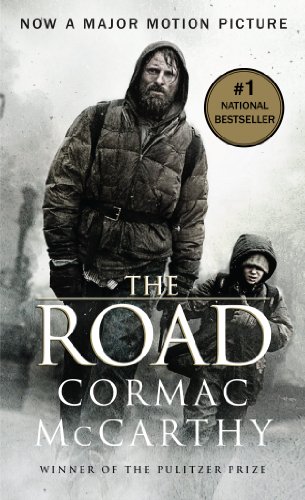
Dorothy M. hits THE ROAD


Dorothy, a valued and very informed member of our Iconic Book Group  lives in Littletown near Durham City.  Now retired she worked for Durham County Library Service for over 40 years and lists books and reading as one of her great passions.  She reviews books for the website www.whichbook.net - do give this a try if you don’t know it – it is a very original way of suggesting books for readers.  


Here's Dorothy: 

 'The Road is a brilliant novel and a great work of literature – but first and foremost it is an amazing experience.  I was totally immersed in this grim world and in the story of a man (who is dying slowly and ... (more) ..

Friday, 11 May 2012

First Date Ensemble

(Still working on this...)

Pure white wool blanket
straight out of
the asylum, and

cut with sharp scissors
shaped, Singer-sewn, the lining
carved from red silk off-cuts

long roll collar, Raglan sleeves
blue scarf shoulder-draped  -
all knotted fringes

I wear the whole ensemble-
complete with corsair swagger -
cracking image in the mirror

The tall boy smiles,
lifts a hand towards me -
tucks in the naughty fringes
curbing their message
of madness.

LinkWithin

Related Posts Plugin for WordPress, Blogger...