Sunday, 26 August 2012

Dialogue in the short story: Top Tips from a novelist (2)


 As I embark on my short story collection called Paint I am reflecting on the crossover skills between the long and short writing forms. Today it is the role of dialogue in fiction.


Thinking of the story
 Dialogue has its part to play on both long and short fiction. It presents very common problem for new short story writers and novelists 

Dialogue is hot and hard and challenges the reader not just to imagine, but to hear different voices, It allows us to witness aggression, seduction, passion and anger and the nature of relationships without having to be told that this is happening. What is happening hits you in the face. Look at these writers, What do you witness happening here?

Look at  Why Don’t You Dance? by Raymond Carver 

and observe  his ability to imply risk and jeopardy through what seems like simple dialogue.

…He sat down on the sofa to watch. He lit a cigarette, looked around, flipped the match in the grass.
The girl sat on the bed. She pushed off her shoes and lay back. She thought she could see a star. ‘Come here, Jack. Try this bed. Bring one of those pillows.’ she said.
'How is it? ‘he said.
'Try it' she said.
He looked around. The house was dark. 'I feel funny,' he said.  'Better see if anyone’s home.'
She bounced on the bed. ‘Try it first,' she said...

Or look at Daphne du Maurier’s Don’t Look Now 

where she uses dialogue to set the tone of mystery, threat and personal grief near the beginning of the short story. . 

…‘They’re not old girls at all,’ she said. ‘They’re male twins in drag.’ Her voice broke ominously, the prelude to uncontrolled laughter, and John quickly poured some more Chianti into her glass.
        ‘Pretend to choke,’ he said, ’then they won’t notice. You know what it is – they’re criminals doing the sights of Europe, changing sex at each stage. Twin sisters here in Torcello. Twin brothers tomorrow in Venice, parading arm in arm across the Piazza San Marco. Just a matter of switching roles and wigs.’
         ‘Jewel thieves or murderers?’ asked Laura
          ‘Oh murderers definitely. But why, I ask myself, have they picked on me?’
           The waiter made a diversion by bringing coffee and bearing away the fruit, which gave Laura time to banish hysteria and regain control. …


In my story Sharpening Pencils I use dialogue

to show the uncomfortable contact between a shy girl and her equally shy tutor. I think.

...The girl stood back from the painting and surveyed it. Mrs Forrest came to stand beside her. She said. ‘I do like the way you manage to convey both humanity and abstraction, Miss Wintersgill. You hold onto the intimate relationship while making the meaning universal.’
The girl undid and redid her ponytail, filling the air again with the smell of turpentine. Mrs Forrest contemplated the thought of turpentine infusing the curly tumbling hair. Then she said. ‘I can indeed draw quite well. They told me so at the Slade, many years ago.’
‘You were at the Slade?’ 
Mrs Forrest laughed. ‘So I was. As I say, it was many years ago. I worked alongside people who now are what thy call household names.’
The girl coughed. ‘It must have been hard work there.’
Mrs Forrest noticed the accent for the first time. Somewhere from the West perhaps. She lifted her shoulders and sighed. ‘For the first year all I did, dear, was sharpen pencils, clear workspaces. I did draw at night. That eventually earned me my place. My night drawing earned me a place there.’ She paused. ‘Not that I was very good.’
‘It’s hard to think of you just sharpening pencils, Mrs Forrest.’
Mrs Forrest smiled showing discoloured teeth. ‘Of course I watched what they did and in my little room at night I tried it all out myself.’ She looked around. ‘Just as, perhaps, you do here, Miss Wintersgill, in the dark of night. But then you are so much more original.’ She backed away then, fading out of the room and closing the heavy door behind her with a click. Outside she untied Koppy and let him run through the darkened parkland around the house, barking now and then when he scented prey... 

And in this story, The Little Bee I have tried 

to show the world of a little girl observing the complex and ambiguous world around her. Clearly here I am unable to resist contextualising the dialogue in the larger narrative. But perhaps there is room for that in the wide world of the short story, I hope so.

... Amalie put a hand on my shoulder and I stood up before her. ‘And your Mama was very beautiful, ma p’tite. I knew about that. Hadn’t I been her dresser in the Theatre de Varietés? The sheer beauty of your mama drew great applause.’
My father giggled then. ‘But unfortunately she could never remember a line. Not a single line. The manager who had been intoxicated with her became embarrassed and employed beauties with more brain and better memories. Her friend Josephine was one of these.’
Amalie suddenly scowled at him. ‘But after all when you met her, Monsieur, you fell in love.’
He sighed very deeply. ‘So I did, Amalie. So I did.’ And with this he laid his head on the stout oak table and fell asleep, snoring and snuffling within minutes.
My gaze met Amalie’s and - both embarrassed and amused - we started to laugh. She hugged me tight and I could smell the meat and garlic on her. And my father’s fruity cigarettes. Still laughing, I helped Amalie to trundle the trolley through to the dark back places of the house, where her two nieces, who couldn’t speak French at all, washed the pots and dishes and cleared the kitchen for the following day.

As always you should make your own judgement.


? Why not try these …

Abstract some dialogue 

from an existing short story – separate it on a page – and decide what you are doing here. Can you cut it back to just what is spoken? Can you implant more meaning, enhance the tone, and expose the difference in the way people speak by what they say?


- Take a one line encounter from your story 

and render it into dialogue which gives us more of the different lives of the speakers without telling us facts.


Take an overheard fragment of the conversation of strangers 

and create a whole incident though invented dialogue 

Happy writing!
wxx 


@


Friday, 24 August 2012

Top Tips From a Novelist Writing Short Stories.


Even after so many novels I can’t begin another one until this existing one is properly ‘put to bed’. On the other hand I am not properly happy or resolved unless I am weaving stories, small or large.
So, while I am awaiting news of my new novel from the publishers I have decided to stop biting my nails and write six short stories around the theme of painters and sculptors. In reviewing my novels (here) lately I am reminded how often I the umpulse to paint re-occurs in my fiction.
Man in tree - Short story inspiration
This could be because I once briefly trained in and taught art and find many useful analogies between writing and art, For instance in The Romancer (or click on sidebar for Kindle) I  compare the large scale planning of a novel to blocking in a canvas. I have found that a number of writers have emerged from the art world. There is a serious kinship here.

In this ‘Paint’ project, for technical and creative inspiration I have gone back to the sublime William Trevor, the cool RaymondCarver, the elegant Scott Fitzgerald and the dark Daphne du Maurier. I would recommend these writers to anyone embarking on the writing adventure of  the short story.


Their works have inspired me to think of:

- The significance of the title: think of Carver’s What Do We Talk About When We Talk About Love; think of Du Maurier’s The Birds.
- Staying tight: every word must be a bullet  right to the heart of the meaning. This is even so if the prose looks casual or informal.
- The power and pertinence of title in combination with the first lines as they charge right into the story.

Now - putting my money where my mouth is - here are the titles of the first four stories with their first lines.  See what you think:


Short story 1. Wraparound
Using the invisibility afforded by the wide brim of her hat and her wraparound sunglasses the woman kept watch on the man on the rickety stool. He was painting on a small canvas clamped on to an equally rickety easel jammed against a rock, on top of which was parked a red coffee bowl.
    The man’s looks were unexceptional: dry skin creases of an ex-smoker; wispy grey-blond hair; nut brown skin;  whipcord muscles etched into long thin arms. She watched him as he stared for long minutes at the long beach and the sea and then – his brush held by the end, like a sword – he dabbed a spot of paint on the left hand side of the canvas…

Short story 2: The Little Bee
You ask how I met him? That you need this for your book? Well, it started very early mademoiselle.
    My father used to draw me as a child. He sketched my chubby feet. He outlined my roly-poly body and filled me in with pastel, rubbed hard - red, white and ochre with green in the creases. Alas it was a losing battle. The emerging face was always far too old for a baby. Those works remained hidden...

Short Story 3: Sharpening Pencils
Mrs Forrest always called her students by their formal names. ‘Miss Montague, your line is improving. Flow, dear. All is flow!’ And, ‘Miss Clark you must look for the light. Do look for the light, dear. Don’t imagine it.  Do make the light work for you.’
Mrs Forrest’s domain was a long chilly room - the ex-laundry of a large castellated house, once a great manor house, then a First World War hospital, then a psychiatric hospital. Now it was an obscure college for girls who – for one reason or another – had not made the grade elsewhere.

Short Story 4: How I Became a Painter
The house was awash with Harry’s drawings and paintings pinned on chairs and cabinets, on walls and curtains. Each painting and drawing that Harry had made since he was eight or nine was on display in the narrow house. Thomas realised his friend was telling the world ‘This is me!’ in defiance of his father who’d never been comfortable about his son’s soft habit of drawing every dratted thing he saw. Boots, machines. What good’s such things, lad? Useless. The workings of a marshmallow mind. His dead father’s thoughts vibrated in the room now defied, contradicted by the rough papers and boards pinned around the room….

The Fifth Story will be about the impact of the prison art room on a woman prisoner

The Sixth Story will be about a painter who photographs a man cutting down her tree and the emerging disputes that define the space between them.

Suggestion!

Why don’t you plan a set of short stories around a theme? You could put them one by one into competitions, or keep them in a collection for publication either on Kindle or in more conventional form. The theme allows them to build into a coherent body of work, which is intrinsically satidfying for any writer. They could also be a showcase for the development of a novel around the same theme,

Happy writing!


For inspiration about short story success check out Avril’s blog.http://www.avriljoy.com/tag/tania-hershman/

© Wendy Robertson 2012


Friday, 17 August 2012

Novel Marathon 7: 1960s Factory Life as Inspiration


Unusual Friendships in the 1960s

Sandie Shaw  and the Millionth Marvell Cooker - The facts behind the fiction?

The Story of a Story -

This novel is about three women who meet on a cooker factory production line in the summer of 1965 when singing sensation Sandie Shaw comes to present the millionth cooker to one lucky customer.

But what, you may say, are the facts behind the fiction?  Factories - the manufacturing base of our economy before it was stripped away by politicians - get a poor showing in fiction and drama, appearing as unpleasant places where only unthinking people work.


I knew - and know different.

I was truly lucky in that as I wrote this novel I could draw on many facts from my personal experience.  


 Spennymoor, where I grew up, was dominated by Smart & Brown’s, a very successful domestic appliance factory which later evolved into Thorn’s, then Electrolux. All around the county mines and steelworks were closing down, so this so-called light engineering factory was not only a lifesaver, it preserved a community that would have just about died out.

The factory I knew was a driving, buzzing, exciting place. In the Sixties more than two thousand people worked there, so it was no small enterprise. At one point my own mother, brother and sister worked there.  I worked there myself in my college vacations. I later met a man who worked there, and, (to quote Charlotte Bronte) reader, I married him!

So all my life I have been witness  the comedies, the tragedies, the mirth and the malice of this extraordinary place, this welter of stories,  this common memory of people my home region. What’s more, I have enjoyed a very privileged inside view.  There is a literary snobbery about factories and the people who work in them, So often in fiction and in documentaries factories are alluded to as dingy, hopeless places, where downtrodden, exploited workers do boring jobs. Not so here! I knew from experience that this factory was no stereotypical satanic mill, or boring workplace: it was as fascinatingly complex and as buzzing with stories as any lawyer’s office, government department, or college campus.

Of course, to outsiders it could be an alien world. Here is the first view Cassandra, my central character, has of the Marvell factory:


'... At the factory gates the streams of workers, flowing from the dozens of of buses, merged into a river of people, pouring down the walk-way towards the flat grey hangar-like buildings that encompassed the great Marvell enterprise. I had to stop to take it in. Of course I’d heard about this place from my mother. And I’d seen it many times from the bus on the main road. But up close it was another thing: bigger and dustier, kind of seething with some life of its own. 
Straight ahead this long, high loading bay fronted the big cooker building: a big wagon was already parked there, its rear doors wide open. Two boys in warehouse coats over their drainpipe trousers were sitting with their legs dangling over the edge of the bay, having a last cigarette before they started and whistling appreciatively at the best looking girls as they passed.
‘Come on, Cassie!’  My mother nudged my arm and led me through a door at the side. While we stood in the queue waiting for her to clock I blinked round at in the inside of the building  and caught my breath.  Here the building was twice as big as it seemed outside. The long production lines stretched into the distance, overhead wires looping down like so many spiders-webs. No machine sounds. Just the echo of voices.as hundreds of people trickled towards their station, muttering, laughing, dumping out their cigarettes...'

I always knew I wanted to write an authentic tale about factory life. I tried for years to think of a way of doing this. But what I need was a single incident on which to hang my story. Then one day an insider recounted a legend to me, that amongst the other grandees who visited this important local factory to celebrate its success in the Sixties, Sandie Shaw had been there once, to make a presentation. I was truly excited at this, as this elegant iconic figure somehow expressed for me the optimism and surging creativity of the Sixties.

At first I thought it might not have really happened. But an article I wrote for The Northern Echo brought an email from the man whose very elderly auntite had been presented with a cooker by Sandie Shaw, So I was reassure. But my own fun was magining the impact of such a visit on just such a factory, which in this novel I have fictionalised as Marvells. In doing this I join the company of other writers with recent and projected plays with fictional references to the living Tony Blair, Messrs Brown, Blunkett & Prescott, and now even Margaret Thatcher. There are novels with fictional allusions to the Royal family – that one by Sue Townshend for instance,  about the queen living in a council house and then there is Alan Bennet’s  surreal ‘The Uncommon Reader’ about the Queen joining the library. And of course there are many fictional allusions to Elvis, but then he is no longer with us.

So, in my novel, Sandie is there in spirit and then briefly glimpsed from afar. The only time she is front stage is when she meets her worshipping fan Karen presents her with flowers:

'Sandie Shaw’s wearing these patent pumps with tiny heels and   is certainly tall, taller than Mr Cartwright the sales manager, and as tall as Mr Priest, who is hovering at her elbow with a  grin on his face as wide as Tynemouth   She looks young, younger than Karen even. Like Karen she’s wearing an A line dress, but hers is in swirling greens and blacks. Her hair is down, her fringe too is swept to one side and pinned with a slide.  She has these enormous eyes in a pale face that is pretty and strong at the same time. Strange though, there is this aura around her, like she is in the spotlight, although there isn’t one here on the factory floor.  The women applaud as she passes. Some of them shout and say, ‘Hey Sandie!’ ‘Take off your shoes, Sandie!’ And ‘Give us a song, Sandie.’ It’s as though they all know her personally.
It’s really weird.
The entourage slows down when it reaches us and Karen steps up to hand Sandie Shaw her bouquet. Sandie passes the bouquet to the smartly dressed woman beside her, shakes Karen by the hand and asks her name. Then she looks her up and down and says with a warm, broad smile, ‘For a minute I thought you were me!’

Although Sandie is very important to the novel in terms of being a symbol of the times and is significant to the characters in terms of their own identities, her only role here is as a brilliant  icon. It is what she represents, not who she is that is important to the factual basis of the novel.

This imagined event, with Sandie as a fairy tale figure just glimpsed from the sidelines, is at the core of the story.   My novel would be built around  the week at Marvell’s of such a great event. Sandie Shaw – that ultimately mysterious Sixties icon – would be a catalyst in the lives of my characters; the young Cassandra and Karen, and the older, more worldly wise Patsy.   

The first version of Sandie and these imagined events was as a play. I had this image of a production line rolling down centre stage, of back- projections of Sandie and Elvis in song, alternating with heaving halls of Rock’nRollers!  (One potential director mentioned the cost…) The Play nearly happened, but when I realised how much collaboration and compromise it would involve I backed off, deciding I really was the cat that walked by herself.  Only a novel would do.

So the novel finally emerged from the play like an explosion from a catherine wheel. The great thing is that as I wrote Sandie Shaw and the Millionth Marvell Cooker, I was able to play, in turn, the writer, producer, director, and all the characters.  It’s pure fiction, of course, but each element of the novel is based on lovingly known facts of that place in those times and is a tribute to the fine people who worked in a real factory and live a real Northern town.

And, as I say, it is a tribute to Sandie Shaw and all of us who were young in those innocent days.                                          


  -----( The ideas behind this post come from and article I wrote for the Northern Echo when this novel first came out....)


Tuesday, 14 August 2012

Quaint People: Travel as Inspiration.

I just came across this: scribbled as a blog in my notebook when I was in Ireland. As I have just  written about Castletownshend and Edith Somerville I thought this note deserved to be transferred properly from my notebook to this blog.


Tools of the trade,
'How I love to travel and stay! And when I am in any place I love to try and understand its nature by dint of a little looking, a little reading, a little thinking, a lot of empathising.

My mission when staying in any place is as a writer, not an historian or an anthropologist (although I do enjoy dipping into these disciplines). 

So, inevitably in my life I have been  tempted to write about these places. I travelled to the Languedoc for five successive years and out of that came  Englishwoman In France and then my just completed novel, The Art of Retreating. (Extract) (Another extract here.) I have also just finished a long short story which is set in those regions but is cooking on the back boiler and has not yet seen the light of day.

These are all clearly works which would never existed had I not traveled, stayed in and loved France.   

Now  I find that  it's Ireland's turn to become my source of inspiration.  

I have just reminded myself that earlier times in Ireland inspired the beginning of my novel Under a Brighter Sky. * Also article here  In that novel the family walk out of a distressed Ireland and take a boat to Liverpool. From there they walk to North East England to find work in the railway shops of Shildon and to participate in the Industrial Revolution on the English mainland -  just as others migrated to the new worlds in the United States of America and Australia.

What they left behind was a country virtually untouched by a significant nineteenth century leap into the modern world. The  residue of colonial domination underpinned by military power meant that for a time the minority ruling class could live on in feudal style increasing battered grandeur which on the surface did not value the vibrancy of the original Gaelic culture and the succeeding Norman-Anglo-Irish-Culture. These people may never have been to England or, in visiting, be seen as quaint Irish incomers enriching the literary and artistic life of London. But they were loyal to the Crown and their menfolk fought in many wars in defence of that Crown which they saw as their own.

 Even after the evolution of an Ireland free of English domination, deep in the countryside these obsolete set of values and attitudes ticked on, survived in pockets to a quaint and remarkable extent, These were people obsessed with the countryside, hunting over wild land, knowing and loving their dogs and horses as well as and more than the country Irish around them.

This unique life  as I said in my last post (below) was documented beautifully in the stories by Somerville and Ross. In its later more battered stages it is reflected in the wonderfully spun stories by Mollie Keane such as Good Behaviour.

Of course there are many gifted modern Irish writers of great repute whose novels enjoy universal literary acclaim. But I find myself fascinated by those ambiguous times when what it was to be Irish was such a mixed bag. There must be a new story for me there.  Perhaps I need to travel to Ireland a few more times to find it...' 

NB Written in the Customs House in Castletownshend, Cork.


 *still on Amazon in paperback and will be available on Kindle in September.

Monday, 13 August 2012

Irish Magic: Catching up with Edith Somerville

Elegant MFH
Edith and Violet

One of my reading treats on my recent stay in the West of Ireland  - apart from reading about pirates and white slavery there in then18th Century - was to catch up with some books about and by the fascinating Edith Somerville and Violet Martin Ross whose families had been on Ireland for hundreds of years...
Edith talkse about their method of collabaration as being conversational ...

 Click: More about Edith and Violet and their important books on my Love Affair With Books page

Monday, 30 July 2012

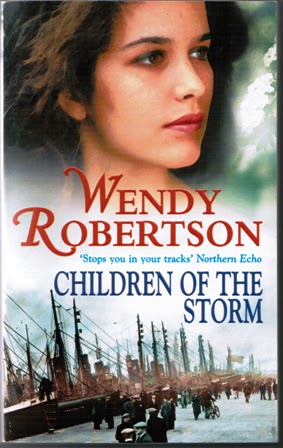
Children of The Storm; Stage Six in My Novel Marathon

Second in Kitty Rainbow Trilogy
Click to obtain

How does a trilogy happen? In my case it certainly was not planned. 


When I completed the novel Kitty Rainbow instead of the sense of closure which can come at the end of a novel I was haunted by the still powerful presence of the charismatic and complicated Kitty Rainbow. There seemed to so much story untold.

I was compellers by this feeling made me to embark on a sequel with the idea that this novel should stand alone, apart from Kitty Rainbow but could also be read in sequence. Hence I embarked on my only trilogy.

So it happens that Kitty Rainbow emerges again, dominating the background of Children of the Storm. Kitty learned her lessons in life from retired fighter Ishmael Slaughter and has become the proprietor of Rainbow and Daughter a very successful draper’s shop in the Durham market town of Priorton. She is life partner (but never married – very scandalous in those days) to William Scorton inventor and manufacturer whose factory in this novel has been turned over to the making of shells in the Great War.

In the foreground of the novel are her stepsons, Samuel, Michael and Tommy, and Leonora and Mara, her children with William.   Taking place between 1915 and 1921 the novel tells the story of this complex family, set against the dramas of war on the home front, on the Somme, and on the bloody Russian Front where Russia is slowly disintegrating into full scale revolution.

In her fifties now, Kitty is very involved with her business, William has retired to make clocks and invent a signalling mechanism for railways, middle-aged Michael is running the armaments works, Left-thinking thirty eight year old Samuel is in Russia writing journalist, acting as a go-between and perhaps a spy, thirty seven your old Leonora is working for the Russian Red Cross in field hospitals, seventeen year old Tommy  is kicking his heels dying to be a soldier and  fifteen year old Mara is a pupil teacher in a school in the coastal port of Hartlepool.

The event at the beginning of the novel – the bombardment of Hartlepool – sets away events impact this  family to its core and reflect the destructive ripple, rippling impact of war on the individual.

For You, if you have just a few more minutes

Some Extracts


In Hartlepool fifteen year old Mara arrives at school early in the morning reflecting on the difficulty of the task she has taken on and the fear she has of the domineering head teacher Mr Clonmel.
...
He was nodding now, a slight smile on his face. ‘Then you too are an example to our children Miss Scorton.’
She struggled to think well of this, but was uncomfortable again at how he could turn even this fascinating idea into a lecture. She was relieved of the responsibility of answering by a heavy rumble from the direction of the harbour.
Mr Clonmel turned his head. ‘Guns,’ he said. ‘The soldiers in the battery must be practicing.’ She was just glancing past him, looking for some means of escape when the earth beneath her seemed to ripple like thrown silk and the whole building about her shuddered like a restive horse. For a second even the dust in the air seemed to be suspended. Then there was a creaking and groaning of wood; every pane of glass in the partition cracked like a rifle.
Then everything went black.
When she came to, Mara found she had been flung into Mr Clonmel’s arms. ‘Mr Clonmel!’
There was no reply. Desperately she pulled herself out of his frozen clasp and he fell, insensate. The shriek of a bursting shell pieced the fabric of her brain. She struggled to her feet and looked at the crumpled figure on the floor. She leaned over and then recoiled from the mass of blood and brain matter spilling from the back of his head.
‘Let’s at him,’ Miss Scorton. Give us a see.’ Joe Bly knelt opposite her and put a blackened hand on Mr Clonmel’s scrawny neck.
‘Is he dead, Mr Bly?’
Joe shook his head slowly. ’Nothing so sure, Miss Scorton. Dead as a doornail. Seen a few like that in Africa, fightin’ them Boers.’

Having worked as a governess in Russia 37 year old Leonora Rainbow has volunteered (as some British women did) to work for the Russian Red Cross.

She resisted the temptation to smooth down her grey dress and white apron or to tuck a wandering curl under her white veil. The other fifteen nurses all younger than her stood as still and rapt as the icons around the walls, their eyes glued to the gold-clad back of the priest as he made his way to the alter.
The perfume of incense wafted across and made Leonora’s nose itch. The breath of the priest iced on the air as he made the signs of the cross. She was used to these elaborate rituals, having quite regularly attended services with the Poliakovs. In fact her young friend Lucette Poliakov was here, first in line waiting for the priest’s benediction.
Now the priest was turning to face them, causing a ripple of indrawn breath, a rustle of feet as he held out the crucifix to full view of the congregation. He blessed the heap of red crosses then, having asked the name of each girl, blessed her, presented her with a red cross and offered her his crucifix to kiss. ‘To you Leonya, child of God, servant of the most high, is given this token of faith of hope of charity…thou shalt tend the sick, the wounded, the needy; with words of comfort you shalt thou cheer them.’
Standing in the shadow of the great door, and tall man in high boots and a shaggy hat carefully scrutinised each veiled face. Suddenly Leonora’s hands were grabbed and she was pulled against a great chest in a bear hug which brought with it the smell of snow and tallow candles, of pine forest and tobacco. She struggled to free herself and stood back to identify her assailant.
‘Leonora! Leonora! Leo!’ The voice that clipped its way through the massive beard was English and she knew it as well as she knew her own reflection in the mirror,
She drew closer to peer into the man’s face in the pearly half-light that strayed into the cathedral from the snowy square outside. ‘Samuel!’ She finally got the word pout/ ‘What in Heaven’s name are you doing here?’

AND STILL THERE WAS MORE STORY IN THE FASCINATING RAINBOW FAMILY -
SO TO COMPLETE THE TRILOGY I MOVED TO WORLD WAR 2 
WITH THE THIRD NOVEL IN THIS TRILOGY

A THIRSTING LAND:


More about this one anon ....

Children of the Storm

Scroll down for notes on the Kitty Rainbow novel itself and the Priorton Map and for inside info on Kitty Rainbow 
Riches of the Earth, Under a Brighter Sky,
 Land of your Possession and A Dark Light Shining.


I hope you are enjoying or will sometime enjoy them all


Saturday, 28 July 2012

Kitty Rainbow Novel Marathon 5. Fiction from a Dream


The creative spring of a novel (as this marathon sequence is showing) emerges from many parts of a writer’s experience . 


One night I had this vivid dream.

 I was walking by the sparkling River Wear in field beside a great historic railway viaduct - one of the earliest in the world. In the air above the viaduct a rainbow appeared. I was suddenly aware of something falling on me from a great height. I put up my arms and into them plopped a baby, warmly wrapped (I nearly wrote there in swaddling clothes...) 
Now I do dream of babies now and then. I think they're  symbols for the stories that keep popping out. After all what is this marathon but a celebration of my twenty three novel-babies?
Then the next day I woke up with the name Ishmael Slaughter  tumbling from my mouth. I said it again. Who would have such a name? By the end of the day it was in my mind that this was a very big man, a craggy man, who had once been a bare knuckle fighter. Suddenly it came into my mind that it was this man who raised his arms under th viaduct, it was he who in the story will grasp and save  the baby.
Then my husband – who never misses the Births and Deaths column in the Northeen Echo turned to me and said, ‘Here, Wend! I have a good name for you!!'  He reads: ' “the death of Kitty Rainbow, sister of Bunty” ’ Of course this sweet man had lived with me and experienced my long search for interesting, meaningful and significant names for my stories.
Inevitably there followed much research, not least into the history of bare-knuckle fighting – but out of all this came this novel Kitty Rainbow.

 For you

The Story
Ishmael Slaughter calls the baby Kitty Rainbow and fosters her with the strange drunken shopkeeper  Janine Druce. Kitty’s greatest love is for her adoptive the aging boxer who is the only link with who she is, where she came from...

From near the beginning:
Ishmael looked down at Kitty’s battered face, her ragged clothes,  and her bare feet, arched too high and turning slightly inward. He stroked his beard and frowned at Janine  ‘i’d have thought the shop’s doing all right now, Janine Druce. Alright enough ot put shoes on thios child’s feet. His voice was soft, its articulation very distinct, ‘These are prosperous times. Those cotton men may be laid  off in Lancashire but the collieries and ironworks are going full pelt across here.  There’s money enough around for fancy clothes…’
His glance dropped to the child, 'Come here Kitty Rainbow, so that I can see you properly.’ He turned Kitty round towars the gauzy light coming from the window, The hand on her shoulder was light as a feather, as big as a frying pan, He peered into her battered face and his knobbly fingers grasped her more tightly. ‘Have you been doing this, Janine? Good God!’
‘I telt yer, Ishmael. She gets into fights.’


From  near the end:
Among other adventures as she grew up Kitty Rainbow has become a respected shopkeeper in Priorton.  Here she is in Edwardian London with her theatrical friend Esme:


‘Just one thing.’ Kitty reached inside her jacket and pulled out the cornelian pendant, rubbed it with a linen handkerchief and let it fall. It glowed softly against the black broadcloth,
Esme grinned. ‘Ha! Putting out the flags are we? Telling the lovely Willian we’re all at home?’
Kitty shook her head. I don’t know. I was horrible to him last night,’
‘Why?’
‘I don’t really understand.  To tell the truth all the time I’ve been here I’ve hardly thought about William at all, just Leonora and Ishmael. When he came to Merridew court last night he seemed like a stranger, And the two of them, him and that Hunter fellow, they loomed up out of the alley and I thought of this man who’s …’
Esme put an arm around her, ‘Nine day wonder, these murders. I’ve told you. Things like that happen round here. You have to harden yourself to them.’
Kitty shook her head again. ‘I’d never get used to them. All I want is to be back in Priorton. Back behind my counter, planning for the new shop.
‘There’s wickedness in Priorton too,’ Esme objected. ‘Murders. Beatings. Remember I grew up in the Royal George. And I’ve lived with Jarrold. Always in the edge of such things, he was.’
Kitty glanced at her. What had made Esme think about Jarrold?  Was she making a connection between Jarrold and these murders?
‘I wonder where Jarrold’s got to,’ she ventured.
Esme shrugged. ‘Signed on for some ship to America I should think. He mentioned America in the note, didn’t he? Always wanted to go back there, always.’


USEFUL NOTE: KITTY RAINBOW turned out to be the first of a trilogy. 

I didn't quite know that when I finished it. 

More tomorrow.


Scroll down for the Priorton Map and for inside info on 
Riches of the Earth, Under a Brighter Sky,
 Land of your Possession and A Dark Light Shining.


Friday, 27 July 2012

Mapping Your Story: Stage 5 in my Olympic Novel Marathon

I have just watched the Olympic flame come up the Thames and I have  only covered 5 novels in my novel marathon.


Here for You


...  in this post - taking a breather - I thought  I'd tell you about the fact that I always work with some kind of map for my stories - sprawling across  my study wall fo a year or so to keep my imagined world before me. This is a my top tip today for those aspiring big novel writers out there.


For instance for   A Woman Scorned I gradually built up on a roll of wallpaper drawings of a street 18th and Ninetneth Century Century buildings in the West Auckland steet where the alleged murderer Mary Ann cotton had lived, I drew the people who lived there and pasted on images of 19th Century peopole and vehicles in the village street.

I  had made similar maps of people and place  for my first four novels which all took place in and around the South Durham town of Priorton. - my nom de place for the marvellous market town of Bishop Auckland where I live. (In later novels I came clean and gave Bishop Auckland its own name,..)

My editor at that time asked me to make a map covering all the first five novels. So I distilled all the maps and located all my characters. The map was part of the frontispience of KITTY RAINBOW the story - the first of a trilogy - which is my fifth novel and which I will post about next. Tomorrow I hope, marathon permitting....

On this map of The Priorton Novels I locate the characters and the home ground so important for these first five novels.I hope you can make it out. Scroll down on this blog page for inside info on the first four novels and watch out tomorrow for the story of the story of KITTY RAINBOW which started with a dream.

I am learning a lot in this marathon process.

I hope all this  entertains you Wx


Tuesday, 24 July 2012

Dark Light Shining Olympic Novel Marathon 4 Research as the springboard for fiction.


Research as the springboard for fiction.

With my background in history and sociology I have  researched material, people and places which have in the first place been nothing to do with my fiction. Some of this was for academic essays, reports and journalism. But alongside this is fiction. One example of this is Paulie’s Web (see sidebar) which emerged from work and enquiry in a women’s prison.

Twins appear in more than one novel
lNB Another great Len Thurston cover.
Click to Buy. Now also on Kindle

A Dark Light Shining came from quite another place.

One day the vicar of what had been Witton Park  - which had been a cruelly poor village in the 1930 - asked if I would record interviews with old people there – one was a hundred years old – who had experienced that village throughout the twentieth century. I interviewed a number of these very interesting people and duly created a transcribed archive.
One of the youngest of these people – a lovely lady in her mid seventies - had been the daughter of a shopkeeper – marginally less poor than her neighbours.

 I asked her about holidays.  
‘Oh!’ she said ‘I never had a holiday until I was forty.’ She paused. ‘Except for when I was twenty one, when I went to Nice in the South of France. Thomas Cook. Twenty six pounds seventeen and six. I went by train. On my own.  Two women joined me on the train. One got on near Birmingham. She was a bookmaker’s wife. The other got on the train in London. She was very beautiful,  what they called a model and was going to meet her man friend down there. We stayed in different kinds of hotel but we met every morning to swim and drink hot chocolate. I stayed in an auberge and the waiter introduced me to Sauternes. I have drunk that ever since.  Right up till now.’
‘Why France?’ I asked.
‘There was this woman who came to live in the village. She was different, She even wore trousers. She was married to a man who had been injured in the great war. Shell shock, you know! Anyway in the Great War she’d gone to France, rented a house behind the lines so she could be near him. She loved France. Told me all about it. She had maps. So when my father drew an insurance when I was twenty one and asked me where I wanted to go, I said France.’  She showed me a treasured pale green fabric belt that she had worn on that holiday. 
(NB in the novel this woman is transformed into Jenefer Loumis. And the young girl traveller becomes Finnuola – called Finn.  See below.)
It seemed incredible: a naïve  young village girl aged 21-going-on-12 making that journey one her own around 1933. I checked the Thomas Cook archive in London and found she was not alone in travelling alone in Europe in the 1930s. Then, researching the historical background, I became interested in the fact that her unique personal adventure took place in the year that Hitler came to power in Germany.


Fiction emerging from Fact:

After a year or so all these fragments came together like iron filings under a magnet and this novel – this fiction – came to life as A Dark Light Shining. By this time the character Finnuola is her own self, not the lady from the shop. And she is surrounded by characters also purely invented by me, driven into life by the narrative. So there is the point where the story becomes its own self quite apart from the research which inspired it.

The Story

From the beginning: In the village 
‘ … Inside the house, Jenefer had Michael’s money neatly stacked. ‘Thank you Michael. Hubert  could not have done without you. He feels comfortable with you.’
Michael shrugged. ‘He’s a queer old coot, but he’s no harm.’
Jenefer smiled at him. ‘Finn was telling me you have twin sisters. i’d love to see them. My father was a twin. Strange phenomenon, twins.’
He looked around the warm cluttered kirched which smelled of herbs and smokey geraniums. ‘They want nothing here, Mrs Loumis. You’ll forgive me.’
She smiled straight into his eyes. ‘Well, Michael, if those twins fall sick or they need anything, you bring them to me.’
He put his cap back on his head. ‘Well, thank you for the pay. If you want anything else done, you know where to find us.’ He turned on his heel and left.
Jenefer turned her smile on Finn. ‘I think I’ve made progress with that young man Finn.’
Finn leaned against the dresser. ‘You turn your charm on the lot of us Jenefer We’re all sows ears turning into silk purses aren’t we?’

From near the end: In France

(After swimming with Finn, Kate, the ‘model’ has met Denis Constandine  -a leading British Fascist - in her swish hotel bedroom…’

…He wrinkled his nose I thought you’d want to get rid of the nasty salt water and that awful smell of Fleury’s chocolate’ He looked at the bed. ‘And a little rest before your evening’s activities.’
She took her silk wrap from the wardrobe. ‘I’m not waiting around here for you. I’m going dancing tonight. At the Blue Cat.’
‘Ah with your little friend Finn? Not indulging in private enterprise I hope. You know our little arrangement. An exclusive contract.’ He watched her as she peeled off her clothes, rubbed her fingers together and licked them, tasting the sea on her lips. She looked at him directly. ‘There’s nothing in our agreement that says I can’t enjoy my holiday.’

(Later… Kate and Finn are in the Blue Cat, where the floor is made of glass.)
 ‘You might not be able to swim, Finn,  but you certainly can dance,‘ said Kate as Finn was handed back off the dancefloer to the table by an engineer from Coventry. ‘Where did you learn to dance like that? Are there lots of dancehalls in tht queer little place you come from?’
Finn shook her head, ‘I have a friend. We dance to her pramophine, with her husband. It’s much easier here with that orchestra. At least you don’t have to wind them up all the time.’ She laughed, And the floor! They won’t believe me when I tell them about the floor!’
The dance florr was not large but was made entirely of glass, Dancing was like gliding on ice.


Research point: There was such a place and the floor was made of glass… 

Marathon Author’s Note: I had forgotten that in the background I have Jonty Clelland, pacifist and activist from Riches of The Earth and Land of Your  Possession, alongside his gifted wife Susanah.

I hope you enjoy it!

A Dark Light Shining

Scroll down for similar marathon  posts about
Riches of the Earth 
Under a Brighter Sky
& Land of Your Possession

LinkWithin

Related Posts Plugin for WordPress, Blogger...