


‘When you surrender to what is fully now and so become fully present the past ceases to have any power.’ E.Tolle
Thanks G for the pictures and the inspiration.
wx
And now
And now
And now wx
And now
And now
And now wx
‘When you surrender to what is fully now and so become fully present the past ceases to have any power.’ E.Tolle
Thanks G for the pictures and the inspiration.
wx
And now
And now
And now wx
And now
And now
And now wx


‘With presents tucked away and the shortest day not far behind, and with it being dark already at four o’clock and the lashing wind stopping us from stepping outside where to our thoughts turn to?
They turn to long days, bright skies and warm summer breezes. They turn to travel and holidays which will make the high points in the new year of 2012…’
- which was how I opened the Writing Game broadcast at noon on January 1st 2012.
For the January programme the plan had always been to make the connectio
I had lots more to say, of course. But with a busy and people-stocked time over Christmas the January programme loomed up far too quickly for sanity so, beloved visitors gone, I had two very intense days to get the programme into shape.
The first time this connection between writing and travel had a 
‘…Over fifteen years ago in Normandy, France I came across a small very well kept military graveyard attached to a farm. ..I doscovered that the young soldiers – some as young as eighteen – were from villages within a few miles from where I live…I was in tears when I got into the car but I knew in my writer’s heart that some time this place, this feeling would be part of a story…’
So it was some years later that I wrote French Leave - about a boy of sixteen in the 1980s who runs away from home, hooks up with his grandfather, and travels to Normandy. Together they travel to Normandy to visit this graveyard. The grandfather, as a boy of eighteen had fought in this military action and the two of them find the grave of his friend, also eighteen, who had died alongside him.
And years later my many stays in the Languedoc in the South 
I have included a reading from this novel on the programme to give readers the flavour,
Also featured on this January edition of The Writing Game are:
- Historian Glynn Wales on The Grand Tour – Travel and writing in the 17th and 18th century on The Grand Tour – a trip taken by aristocratic young men, for educational, cultural and other less respectable experiences.
- A conversation with Terry Ferdinand, who also loves France. Terry tells of his adventures in buying and refurbishing a house in the Lamousin district. His enthusiasm bubbles through the microphone. He also reads for us an article – previously published in the Limousin Times, about a visit to the historic town of Aubusson, famous for its fabulous carpets.
Writing Game and past editions now available in iTunes Store at
http://itunes.apple.com/dk/podcast/the-writing-game/id478998111
Writing Game podcast from Bishop FM: http://blogs.bishopfm.com/thewritinggame/category/podcasts/
On this programme Avril, Gillian and I discuss the importance of books at Christmas and our secret bookish desires. We also consider the pros and cons of eBooks, writers publishing on Kindle and the desirability of a Kindle reader in your Christmas stocking. We also broadcast extracts of books by Avril and myself – The Orchid House (Avril’s novel set in a Cornish Garden and A Woman Scorned (my novel about the legendary Mary Ann Cotton).
Our choices really ranged widely (see below…) Interestingly all except one are available on Kindle, so whichever medium you choose we hope you enjoy your Christmas reads. You might even find a Kindle reader in your stocking!
Happy Christmas, happy reading, happy writing. .. wxx
* For iTunes go to iTunes store, click on podcast then enter Writing Game and Wendy Robertson under Title and Artist to download.

by Sarah Raven and Jonathan Buckley

by David Almond
(Also on Kindle)

(Also on Kindle)

Henning Mankell
(Also on Kindle)

(Also on Kindle and audio download)

The Orchid House
Avril Joy
(Also on Kindle)


Being a novelist, I am always looking for narrative even in the finest poetry. I am rarely let down:
What can ail thee knight at arms/alone and palely loitering? Now there’s a story…
… he took me out on a sled,/And I was frightened. He said, Marie,/Marie, hold on tight. And down we went./ In the mountains Oh boy, what a story is there!
My novelist’s instincts have been riding high in reading Kathleen Jones’ poetry collection “Not Saying Goodbye at Gate 21’
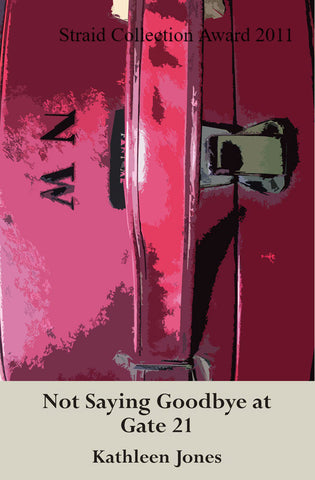
Kathleen is wonderful at showing the hard surface of things and illuminating the drama and depth of things beneath. The poems linger with you in the cafe, or in the bar on the marketplace; they make you think of your own life with its passions, its tragedies.
It is impossible to summarise the themes and the implicit powerful narrative in this collection of fifty four poems. Literary inspiration is there with the empathetic poem dedicated to Christina Rossetti; metaphors for sensual, sexual passion both disguise and illuminate depth of feeling.The most powerful stories here are those in a Cumbrian setting with their tacit signals of power and duty: The Fell Gate which delicately alludes to a life story with dark undertones; the very ambiguous War Hero and the troubling Uncle John, …who was the family conscience. And we have to deal with the dark conclusion to The Soul Catcher: …I have souls to sell you/ for the usual fee – / should you lose yours.
The most powerful writing here for me – the keenest voice – is where the writer illuminates the peculiarly tacit nature of intimate relationships in working class households – as in the poem Ginny. … Ginny carves the bread against her breast/ dealing slices to her brothers/ seeing her father’s shadow at their backs/ putting her school prize on the fire….
And most potent for me - The Laying Out Of the Dead - would be spoiled by mere quotation here and must be read in full in a quiet place.
‘Not Saying Goodbye at Gate 21’ is a book of fine poems and also – for this novelist – a buried treasure house of narrative.
Endnote: The book – published by Templar Poetry is beautiful in itself – lovely to see, handle and read.

Writing is measured, shapely, intended
Every breath out predicates every breath in
Each sentence brings forward another one
Every word is a platform for the next jump
In meaning
We breathe in lines, in paragraphs,
In pages, in chapters, in volumes -
Our life laid there in a trillion words
A million separated, well formed
Page-squiggle-sounds
Writing is the notation of the quiet soul-
Not blasted out by trumpets and clarinets -
Dark smoke in the air, rising -
But the words lie there, just
Waiting for your eye.
They lie there in ranks and lines
Waiting for you to add your world
To my notation on the page
Creating a different world
New to your soul and mine
Writing is the sound of the soul breathing
A WOMAN SCORNED 
If you would like to read a novel based on the historical case of an alleged serial murderer who was hanged in the mid 1800s my novel about Mary Ann Cotton is now live on Kindle.
This novel – based on the historical evidence – shows the prosecution to be faulty, based on flawed evidence suffused with doubt .
The case for Mary Ann is made here by young protofeminist Victoria, who brings a fresh eye to the proceedings in this novel which has curiously modern overtones.
If you haven’t yet acquired a Kindle you can download the novel to your PC, following instructions on the Amazon Connection.
Readers so far have called it life-enhancing rather than depressing…
wx
Great evening for the Durham Book Festival last night in the exquisite Jubilee Room at Bowes museum. I was chairing the event for Claire Malcolm director of the festival.
Adele Parks – writer of bestselling novels reflecting the lives of women today was

interesting, funny and shared many insights into the disciplines of writing a novel each year that will sell massively at home and abroad. She read from her new novel About Last Night – about the friendship between two women and the lengths they will go to to support each other through thirty years.
We talked a bit about the reductive nature of genre labelling such as chick-lit. As Adele said, at thirty five years old, her characters so were hardly chicks . But as she also said if such labelling made her novels seem accessible to people who might not have picked up what is a very well written novel, she is happy. Her sensitivity to this is informed by the fact that she works with charities concerned with enhancing basic literacy across the nation.
She also had some good points to make about how women writers were more swiftly pigeonholed than male writers who also write about domestic dilemmas and issues of relationships.
It is always a sign of a good event when the audience finds it hard to leave and this was the case last night.
Thank you Adele for a great evening.
I would recommend About Last Night as a good read. I particularly liked the character called Pip and original, quite flawed character who is so very engaging.
Looking forward now to other Durham Book Festival

Inspired by Al from Australia who reads this page I went back to the drawing board to redesign the cover of A Woman Scorned the novel I am now revising to be published on Kindle.
Al thought the image too stark and severe and I now agree with him. The whole point of the novel is that Mary Ann was not the monster that legend presents to us. The evidence says otherwise. So I got out my camera and focused on her amazing, sad bewildered eyes and her sensual mouth and her perfect bone structure.
So here is an image of Mary Ann Cotton – and the book – that is much truer to the character in my novel and closer to the historic truth.
What do you think?
Thank you Al…
x
Extract from the chapter
‘2 Fruitcake and Almonds’
(Victoria, visiting from London, is narrating…)
… The porter had taken my hand luggage and settled me in the solitary First Class carriage. I was sitting there in secluded splendour when the door was wrenched open and a pale-faced woman peered in. She pushed a heavy bag and a basket onto the floor of the compartment and lifted a fragile boy of eight or so into the carriage. Then she leapt lightly up the steps herself and settled into the corner opposite to me. I choked for a second on the scent of fruitcake and almonds, with some kind of back-smoke of lavender and honeysuckle. She filled the whole carriage with her perfume and earthy warmth.
I turned to stare out of the window, but not before I’d taken in the image of a woman of thirty or so, of taller than average height with thick glossy black hair under a rather becoming bonnet. She wore a surprisingly fine paisley shawl and - finely polished although stitched and mended – small button boots. Instinctively I pulled my own boot, with its built- up instep, further under the hem of my skirt.
Staring at the puffs of steam dissolving into trails of vapour that streamed past the window I wonder at the audacity of this unlikely woman in entering a first class carriage. Then her voice, low and surprisingly well modulated, cuts through the air between us. ‘And how have you been these past days, honey?’
In the silence that follows I realise that the woman is talking to me. I turn my gaze to meet the darkest blue eyes, large and shining in a perfect oval of a face. Now I see that she is actually quite beautiful, despite the workaday clothes. I want to smile and my cheeks feel hot.
‘Well, honey?’ she says….
Revising this novel (A Woman Scorned) –first published in 2004 - has been fun!
I had forgotten how significant this novel was and how much my outraged sense of justice is at its core. . Interestingly in my new contemporary novel, Paulie’s Web also looks at justice and injustice in ordinary people’s lives. I had not made that connection until I started on the revision of this 2004 novel.
In my novel, I put the case for the defence of Mary Ann Cotton, who was alleged to have killed at least three and at most eighteen people in the mid nineteenth century. Hanged for her ‘crime’ in Durham Goal, she has become a dark legend in the north as their own female serial killer. 
I kind of went along with this idea but once – encouraged by my friend Gillian Wales - I had read all the sources I felt that Mary Ann had been done a great injustice. The novel – based strongly on the original sources – came out in 2004 and I am now preparing a revised edition for the Kindle publication.
To make my point on this revision I have given it a new subheading: A Woman Scorned: Serial Killer or Scandal Victim?
And I have eve designed a new cover to make my point more clear!
What do you think?
A little extract: (These extracts will follow the novel)
The story is told through the eyes of Victoria Kilburn, niece of Doctor Kilburn the doctor central to the story. She is visiting her uncle from London and is delighted and eventually horrified at what she witnesses in this small Durham village. Like Mary Ann (called Marian in my novel) she is an outsider and it is she who witnesses the runaway injustice visited on this unusal and charismatic woman.
Here she is having tea with a new acquaintance Kit Dawson:
… After the usual pleasantries about the weather (gloomy) and our own health (blooming), Kit Dawson tells me a tale about his day sitting at Mr Chapman’s elbow in the local magistrate’s court, making notes regarding a case about two women in West Auckland who came to blows over the abuse of a washing line, and renewed the battle again in court only to be fined five shillings each and bound over to keep the peace.
He thinks this is very funny, but I am concerned at the fine. ‘That would mean such a lot of money to these women. Two week’s wages for Lizzie, my aunt’s maid.’
Kit Dawson is entirely indifferent about this. ‘If they care about that, they shouldn’t start bashing each other. They’re barbarians, every last one of them.’
I shake my head. ‘Mr Dawson. To be poor is a misfortune, not a sign of barbarism.’ I regret the primness of my tone but mean what I say.
To my surprise he laughs. ‘Ah, you live a protected life, Miss Victoria. You should see what I see in court! Drunken miners, low women, thieves and vagabonds, wife-beating husbands, husband-beating wives. For me it’s like that first, most absurd circle of Hell in that courtroom...’
This is the world in which Victoria makes friends with Marian who ends up on the gallows, and shows us the injustice as it happens t0 her new friend.
Note from Wendy: Knowing I like all things French and am interested in his renovation of his French house Terry (my friend who also broadcasts on Bishop FM) sent me this lovely account of a day out in France. So I decided to make him my first guest writer. Whenever I talk to him I think of the Maison d’Estella although I do not own it - Thank you Terry
A Day Out
It was a Thursday and we had worked on and off for a fair amount of the week achieving a lot of home improvements in our French house and actually taught ourselves new French pointing skills. So and as the day was sunny, bright and cool, we decided we were in need of a break and a little bit of fun and some sightseeing.
To the east of us lies Aubusson, a beautiful medieval town steeped in antiquity, with narrow streets, ancient buildings, coffee shops, lots of round towers, the river Creuse and a huge cathedral which stands high above the town and has been designated a world heritage site because of its 600 year old unbroken tradition of tapestry weaving.
Into the car we clambered and headed off to Bourganeuf to fill up with petrol - a necessary evil if you want to get anywhere - and then we embarked upon the forty or so minute drive into the history of France.

Leaving Pontarion by the right fork in the road sign posted to Aubusson, we meander down through the forest road twisting and turning and passing through St, Hilaire le Chateau - another small village which holds good memories for us. On the right we passed the Auberge where we spent our very fist “house hunting” night in the Creuse. I remember the quaint cosy room, the way they had blended very modern glass architecture with the 16th century granite building, and served a sumptuous meal at a reasonable price.
The forty minutes drive passed quickly and very enjoyably, passing through many old hamlets and by verdant fields full of healthy Limousin beef cattle with their distinctive colouring. As we rounded a bend in the forest, there spread before us was the town of Aubusson. Parking was easy, as it is in all of the France that we have explored. You are encouraged to visit and spend money in the towns, and to help you do that, the town councils provides plenty of FREE and well maintained parking places.
Aubusson nestles at the bottom of a valley and straddles the majestic river Creuse. This town has been famous since the 16th century for weaving tapestries and carpets, throughout the centuries. Tapestries have adorned many of the rich and famous chateaus of nobility and - of course - the palaces of the French kings. The town is clearlymedieval in construction, with very narrow streets and tall buildings towering over the passers-by. There are the traditional round towers to be seen everywhere, with roofs of amazing steep pitch covered with tiny tiles and proudly boasting the very French style dormer windows.
Shops and houses are built of granite and many of them are adorned with wonderfully carved lintels and intricate iron balconies over carved doors. The traffic system is one way and works very well with the 20th century cars driving down the medieval narrow streets that have been recently cobbled to give the ancient feel to this modern town.
Aubusson is busy. The streets are hung about with multi coloured pennants and people throng through the narrow pathways and crowd the pavement cafes. There is a feeling of prosperity in the air, and everywhere there are signs of tapestry and antiques shops.
What dominates most is the 12th century Cathedral. Signs tell you there are 50 parking spaces available at the cathedral, so we weaved and threaded our way by car, through really narrow streets, and climbed forever upwards, eventually ending up in the free car park. The views were magnificent, giving us an almost 360 degree panorama of the city spread out far below us. We could see the River Creuse meandering between the buildings below and the narrow streets swarming with tiny people.The new tapestry museum shone like a beacon to our left inviting us to visit and the cathedral, in its entire magnificence, rose up behind us.
We left the blazing sunlight behind us as we entered through a huge oak studded door into the cathedral. At first it appeared to be black and shadowy, but as our eyes became accustomed to the light, we were astounded by the size of the inner space. The roof curved and towered above us and still bore the signs of the medieval artisan paintings of intricate design, although faded and damaged by the centuries of wear and tear. You could still see and imagine very clearly that the entire ceiling, columns and arches were at one time covered with dazzling colour in a huge celebration of the religious beliefs of the people.
The light shone into the huge space in vibrant shafts of colour through beautiful hand crafted stained glass windows, casting a sparkling array of blues, greens, reds, golds, depicting scenes from the bible with an exquisite detail unequalled in today’s craftsmanship[. The space was vast and looked empty, but as our eyes were now accustomed to the inner half-light, we could observed that opon tha walls in this open and unguarded space there hung paintings of great size and antiquity and original tapestries more than three hundred years old.
We looked and marvelled at the lectern which was an oak carving of a griffon from solid oak which held a huge bible. We admired the simplicity of the main altar, the complexity and colourful private chapels, and the sea of chairs arranged in perfect rows telling us that this cathedral was still in use and indeed very well attended.
Inspired by the wall hanging inside the awesome place of worship, we walked out into a wall of heat and sunshine, drove back down through the winding narrow busy streets of Aubusson, and headed directly for the Tapestry Museum/
A little bit of the history.
Tapestry or weavings as they were once called, were used to warm the bare stone walls of the palaces and castles, and were first mentioned in 1601 when King Henry IV banned the importation of all foreign tapestries, especially those from England. Royal manufacturing patents were issued for Aubusson in 1665. Its twin manufacturing city of Felletin received the same patents in 1689.

Once inside the modern air conditioned building and having paid the 4 euros entry fee, I was surprised to read the sign allowing photography, but without the aid of flash, no doubt to preserve the integrity of the many original hangings. The rooms were large and dimly lit, creating the atmosphere and an image in our minds of a modern day cathedral; the walls were as expected, spacious and hung with weavings dating back to the 1600’s. It also included some modern the day weavings. Artefacts both ancient modern were dotted about on tables throughout the rooms. In one corner glowing in the dimness were two very colourful shelving units housing a myriad of colourful wools.
What did draw the eye and immediately grab your attention was the oasis of bright light in the centre of the room. This it was a modern weaving loom and operating it was an artisan working on a small tapestry. For a fascinating and informative 15 minutes we watched and understood the intricacies of the weaving with a loom, we saw the need for patience, and we learned an appreciation of the skills of hand, foot, and eye co-ordination needed by the operator.
An hour passed as we wandered around mesmerised looking at original antique tapestries from the 16th, 17th and 18th centuries. We stared with astonishment at the details and shading created by genuine craftsmen with nothing more than a few coloured wools. Modern hangings were also displayed, and they ranged from traditional weaving, to paintings and stained glass. The trade had modernised and diversified and I suppose it had to stay alive, and grow.
The day at Aubusson was so interesting and informative. What was nice about it was the way it was easily available, almost hands-on. It was a welcomed relief from my own painting and decorating in my French House and well worth the visit.
On our way home we came across another hidden gem in the tiny but very pretty village of Moutier - d’Ahun and we were even more amazed at what we found there. But that’s another story.
Terry Ferdinand
October 1 2011
http://blogs.bishopfm.com/thewritinggame/2011/10/listen-to-spy-fiction/

- Afterwards on Podcast -
Join me and Writing Game regular Glynn Wales as we talk about Spy fiction and the way it links with 20th C History. John Buchan to John LeCarre, Ian Fleming to Grahame Greene, from (recently retired MI5 boss) Stella Rimington to ... well Stella Rimington!
Glynn is on very good form! W e get to questions like Does spy fiction reflect 20th Century History? Do you have to have been a spy to write spy fiction? & Is spying and spy fiction a men's game.? (That's where Stella Romington comes in.)
Next Month we are visiting Escomb Saxon Church for Historical insight and writing inspiration. If you have written about Escomb get in touch and hear your writing on the programme. If you live far away check it out on the web, be inspired and send us your poem.
See/hear you soon!
Wendy x
Escomb i
A dip in the hill
on the way to the river
- water makes a round pool
now called holy
and built upon
by no ordered hand -
just strong men adding
stone on stone
stolen from the military
-their tool marks tell us --
poled on rafts upriver
to build a church.
wr
From Paulie’s Web
This is Queenie, whom Paulie first meets in the white van on the way to prison…
…That time Queenie was sectioned and in the hospital they gave her the pills that took away her visions of the giant trees and stars and the Water Man. She was meek, very good, in the hospital. She helped with the tea rounds, taught a young girl to read, and stayed tucked up in her bed all night.
When they had a case conference the professionals decided that Queenie Pickering was a prime candidate for Care in the Community, now not only fashionable but compulsory. Her house with its cocktail cabinet was sold. In a rare soft moment she had signed the lot over to Janine, her niece. Janine had sold it and gone off to build a new life for herself and her boyfriend Roger, in the depths of Canada.
But there was sheltered housing with a very kind warden. Queenie - for everyone called her Queenie now - Queenie could live there and the nurse could call every week to see that she was taking her medication. Everything would be Hunky Dory. Wasn’t that how Care In The Community worked?
After a week Queenie walked out of the sheltered house. She put on her hat - not so smart now - put all her most precious things in three carrier bags, and caught the long distance bus to the town where they would not find her. Best to lie low, she thought. Best to lie low. The gleaming Water Man would be there. He was everywhere, so he would be in the city. And the sky in that place would be studded with the pearly moon, the golden sun and the silver stars. And there again the trees would stride the earth.
‘…when bats fly at noon
and owls take refuge in darkness
frightened of solitude
proud to be independent
with silver shields
to hide their isolation…’
P.Smith
…Picture this Our writer goes on Monday morning to spend time with writers in Cramlington. Early start to drive there. She found the place after a few false starts. They passed the library and the Pheonix pub, where she has given talks in previous years, This time it was a church hall which she found after circling quite a number of roundabout. (One lady, when she arrived ,was sympathetic. Cramlington is roundabout city, she said.) …
We arrived just in time and a crowded room with a large circle eager faces met me . I had a little flutter with bags and books before I launched into my take on a wroiter’s life.
It was interesting to note that half of the members of this group were men. This is unusual as many groups entirely or almost entirely consist of women. There was definitely an energetic buzz in this room.
I referred to my writer’s memoir 
I read two extracts which begin…
Picture this. A little girl of three in a Fair Isle cardigan, playing outside a house in Lancaster. With her head of Shirley Temple curls she’s winsome, prettier than she’ll ever be in the many years to come. She’s chalking on the sill of the big bay window. She stands back. That looks right. Just like she has seen her mother do, when she writes her letters. But then the little girl frowns her characteristic…
and from much later in the book
Picture this: Our writer, now our young mother, is sitting with her back to the sea wall at Alnmouth on the Northumberland coast, surrounded by the detritus of a seaside picnic. The wind from the east is cutting and she wears two ponchos knitted for her in carpet wool - bought as a bargain - by her mother Barbara. … Our girl has never liked the cold, suffering blue hands and feet as a child….
I read these extracts to show that writing about your experience in the third person carries a curious fictive liberation and allows you as the writer to get closer to the truth without the internal gag of reductive autobiography.
Then it was their turn. I challenged them to write their own ‘Picture this. Some people were unsure. One man said outright that he couldn’t or wouldn’t do it. But he was persuaded. In fact these writers met the challenge wholeheartedly and the read-around revealed some genuine talent and sensitivity among these writers.
The Picture This notion had sold itself and the writers showed both their talented response and their satisfaction in the process.
It was a very staisfying, busy and hectic morning and Avril and I found our way out of Cramlington more easily than we found out way in…
Footnote The discussion was very lively and interested and moved to the distraction of misleading covers and democratisation of publishing for writers through Kindle. More on both those subjects next time.
Take a look at my ebook Paulie’s Web ….

Already lots of people are downloading Paulie. She seems to appeal to many readers for different reasons. If you are interested in the experiences of people on the margins of our comfortable lives, you will like Paulie! She is great - clever, resourceful and capable of surviving the hardest challenges that life throws up at her.
In the story Paulie is at the centre of a web five very different women whom she encounters in prison. Their charm, their pain and their humour affect Paulie’s life and she touches theirs, as we see when they meet again years later. Paulie also has an impact on her psychiatrist who has to change some of his preconceptions when he meets her.
Prisons can be hard places for anyone associated with them. My own experience as writer in residence - for a total of five years - was challenging and life-changing. Interestingly when I was first interviewed for this role I asked the Governor what would surprise me about this experience on the margins of the prison world. He told me I would be surprised how much laughter there was inside.
His words proved to be true. I hope Paulie’s Web – as well as telling the truth about the desperate lives some women are forced to lead – reflects the laughter and the comradeship in that prison – as far away from ‘Bad Girls’ and Mars is from Venus,
Interestingly enough it was after this prison experience – ten years ago - I felt able to reflect on and write about the lives of women in internment in World War Two Singapore, in my novel Long Journey Home (click) which is still around on Amazon and in libraries. That will be on Kindle too whan I get faster at this game.
If you fancy meeting Paulie, Click Paulie’s Web here to download your Kindle edition for the price of a glass of wine, quite a nice aftershave or a bargain lipstick! £3.44
(Stop press - My great discovery today is that if you don’t yet have a Kindle reader there a lots of FREE applications you can download to read Amazon books on your computer – including Paulie’s Web, and my collaborator Avril Joy’s Orchid House . You can get them on your computer, your phone or other convenient screens)
They are easy to read! I had a go. Just click here on stories on your screen and follow the trail.
With my friend and collaborator Avril Joy I have been experimenting with the process of publishing a novel on Amazon Kindle. Like many informed people I have moved from the notion that these E readers might be a passing fancy towards the new and important sense that novels in this new democratic form of publishing can give a public platform to many talented writers whose good novels may never survive the thorny obstacle race that is present day market-driven publishing.
Avril and I are interested in this process for our own work, but also interested in making the process accessible to new writers, particularly those who attend our Room To Write conferences – where many writers are working at publishable level.
So – what to put up on this new, magical system. My second short story collection? One of my early children’s novels? ‘The Romancer’, my memoir about writing?
I plumped for Paulie’s Web which sprang out of my life-changing experience as a writer in residence in a woman’s prison.
This novel has been a long time a-coming. It has taken me ten years to digest the extremities of my experience in prison and write my novel as true fiction in a way that pays tribute to the many women I met while working there. If, by the by, it goes some way to cracking the absurd stereotypes of women in prison it will be an extra delight. While there are dark passages here I make no apologies for the ultimately optimistic tone of this story which is a true reflection of the humour, stoicism and kindness that I was witness to in my prison experience.
So, what is it about?
Paulie Smith, rebel, ex-teacher and emerging writer comes out of prison after six years, her conviction overturned. As she moves around in the next few days, struggling to readjust to the scary realities of life ‘on the out’, she reflects on her life in prison. She focuses particularly on her first few weeks inside, alongside the four very different women whom she first met in the white van on their way to their first remand prison.
Paulie’s thoughts move from Queenie, the old bag- lady who sees giants and angels, to Maritza who has disguised her pain with an ultra-conventional life, to Lilah, the spoiled apple of her mother’s eye, to the tragedy of Christine - the one with the real scars.
And then there is Paulie herself, who ended up in prison through no fault of her own. Their unique stories, past and present, mingle as Paulie - free at last - goes looking for these unique women who have now been ‘on the out’ for some years and are, Paulie hopes, remaking their lives.
Now PAULIE’S WEB is on its way to being out there on Kindle! It is in the works. It should be up there tomorrow for readers to download. Fingers crossed.
Avril’s clever, sensual novel THE ORCHID HOUSE is already out there and she has posted some helpful tips on her blog for writers out there who want to have a go. Her book is downloadable, as she says, for the price of a decent cup of coffee. A new day dawns for all writers.
These days novels with overt or implicit supernatural themes are creating and increasingly popular field of fiction. My own novel An Englishwoman in France 
Last night I went to Thornaby Library to take part in the Read Regional Campaign with two other authors Beda Higgins and Carolyn Jess-Cook
Carolyn talked about her novel The Guardian Angel’s Journal which is the story of Margo, who dies at forty two and returns to earth as Ruth to be her own Guardian Angel and encounters the possibility of making crucial changes change.
Carolyn’s reflections on her approach to writing this novel were satisfyingly pragmatic, not in the least airy-fairy or quasi religious; her affection for her her characters - Margo and her angelic alter ego Ruth - shines out in her discourse. making the supernatural propositions in the novel seem believable, even rational. No wonder this novel is being praised across continents, although perhaps the Americans’ promotion of it as a ‘Christian Novel’ is a bit reductive. A must to read, I think.
Beda Higgins the prizewinning North Eats writer read from her new collection C hameleon. The short story she read to us reflect her insight into a child’s point of view where reality and fantasy dissolve into each other and everyday playground experiences of a vulnerable little girl are processed in a dark surreal fashion that end up in near tragedy and what seems like a supernatural transformation of the little girl herself. Another ‘must’ to read.
There was a buzz in the room, and some interesting conversations. The people asked questions about our writing processes. I seems that we all work in different fashions but agreed that it was most important to write consistently – many days in sequence , to write opportunistically when the time to write emerges, and to have the story in your head even when you are not writing. I advocated separating the writing and the editing processes entirely. Carolyn Told a fascinating story of writing this novel at astonishing speed when an agent had seen the first fifty pages and liked it.
The writers in the room asked for our recommendations for inspiring books. These emerged:
Dorothea Brande: On Becoming a Writer
Walter Mosely: So This Is The Year You Write Your Novel
Stephen King: On Writing
A very good evening…


